
Vacuum Dryer
Kerone’s vacuum dryer are developed with over 50+ years of engineering excellence, providing advanced drying solutions tailored for pharmaceutical, chemical, and food industries.
Engineered precision for Vacuum Dryer.
Kerone’s vacuum dryer are developed with over 50+ years of engineering excellence, providing advanced drying solutions tailored for pharmaceutical, chemical, and food industries. These dryers operate under vacuum conditions to enable low-temperature moisture removal, protecting material properties and improving drying efficiency. Each unit is designed for consistent performance, ensuring uniform drying, energy efficiency, and reduced processing time.
A Vacuum Dryer is a broad category of industrial drying equipment that operates under sub-atmospheric pressure to reduce the boiling point of moisture or solvents in the product, enabling effective drying at significantly lower temperatures than would be possible under atmospheric conditions. This fundamental principle makes vacuum dryers the equipment of choice for any product that would degrade, oxidize, discolor, lose potency, or undergo other unwanted changes if dried at the higher temperatures required under atmospheric pressure. Vacuum dryers are used across a vast range of industries including pharmaceutical manufacturing, food processing, fine chemical production, electronics, and research applications, in configurations ranging from small laboratory ovens to large production-scale vessels handling thousands of kilograms per batch.
Our advanced AI, ML, and IoT technologies, this solution delivers smarter automation, real-time insights, and predictive intelligence to enhance efficiency and drive future-ready growth.
Continuous tracking of process parameters with instant adjustments.
Intelligent fault detection to prevent failures before they occur.
The thermodynamic architecture of our Vacuum Dryer incorporates advanced thermal modeling and computational fluid dynamics (CFD) to ensure optimal heat and mass transfer across the entire processing zone. By precisely controlling thermal gradients, air velocity profiles, and direct energy delivery mechanisms, the system achieves uniform treatment while preventing localized overheating, product degradation, or thermal stress. This balance of intensive heat transfer and controlled retention time ensures maximum operational throughput with minimal specific energy consumption.
Built with heavy-duty structural engineering and sanitary metallurgy, each unit is manufactured to withstand continuous 24/7 industrial operating conditions. Contact surfaces are finished in high-grade stainless steel (SS 304, SS 316L, or corrosion-resistant alloys) with sanitary mirror-polish options, CIP/SIP washdown provisions, and hermetic chamber sealing. This guarantees full compliance with stringent international hygiene, CE machinery directives, and cGMP standards across food, pharmaceutical, specialty chemical, and heavy manufacturing applications.
Proprietary control algorithms ensure strict process repeatability, while built-in safety interlocks and electromagnetic shielding comply with international CE and OSHA standards. Full process development support — including material loss tangent testing, moisture sorption isotherms, and pilot trials at our Ambernath R&D facility — ensures the selected technology matches your exact industrial throughput goals.
Product & Systems Gallery
Explore authentic high-resolution photographs of industrial machinery, pilot trial rigs, and continuous turnkey processing installations engineered by Kerone Engineering Solutions for Vacuum Dryer. Each system is fabricated at our ISO 9001:2015 certified manufacturing facilities with precision laser cutting, robotic welding, and stringent Factory Acceptance Testing (FAT).

Vacuum Dryer
Click to view high-res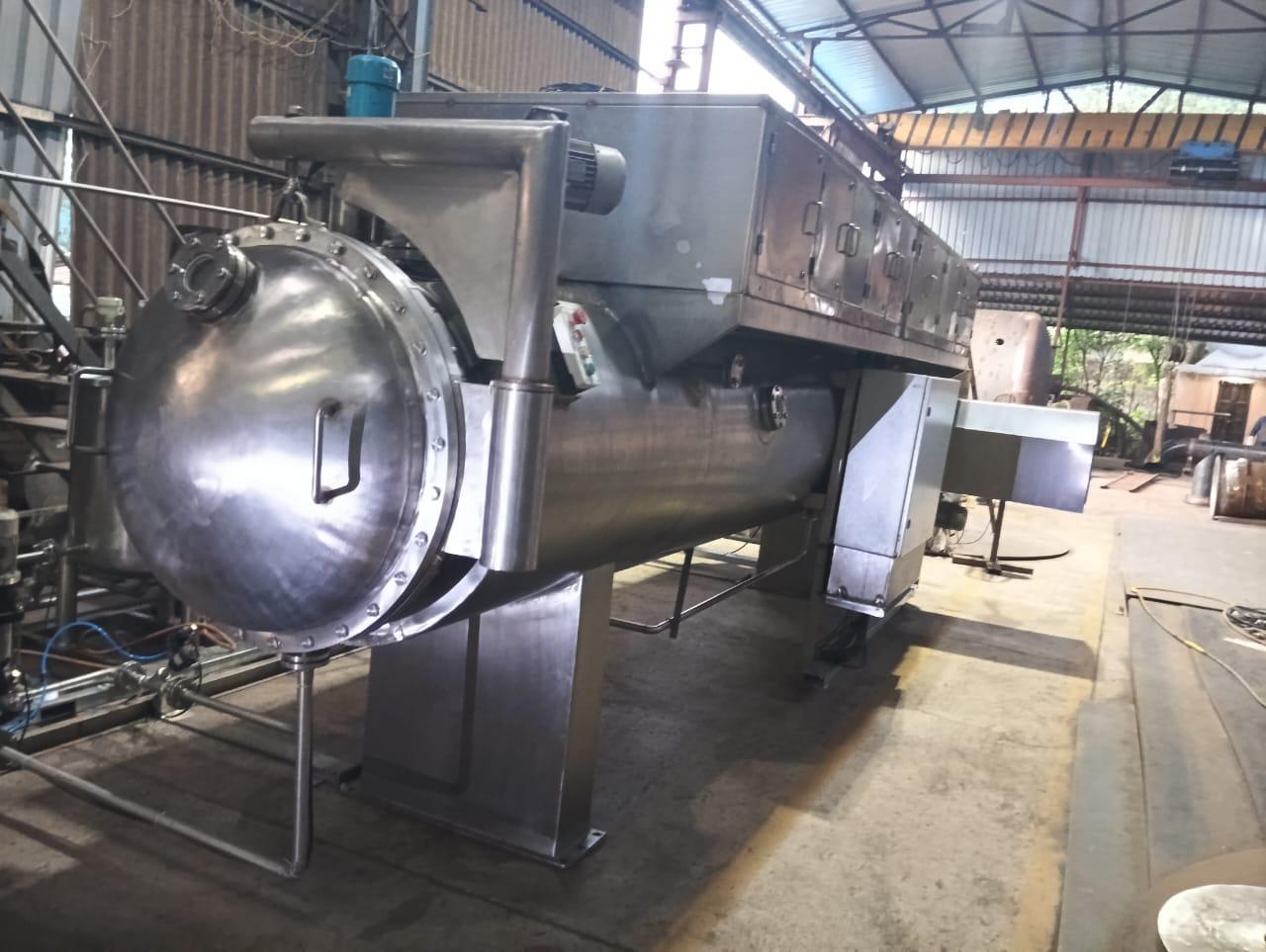
Vacuum Dryer
Click to view high-res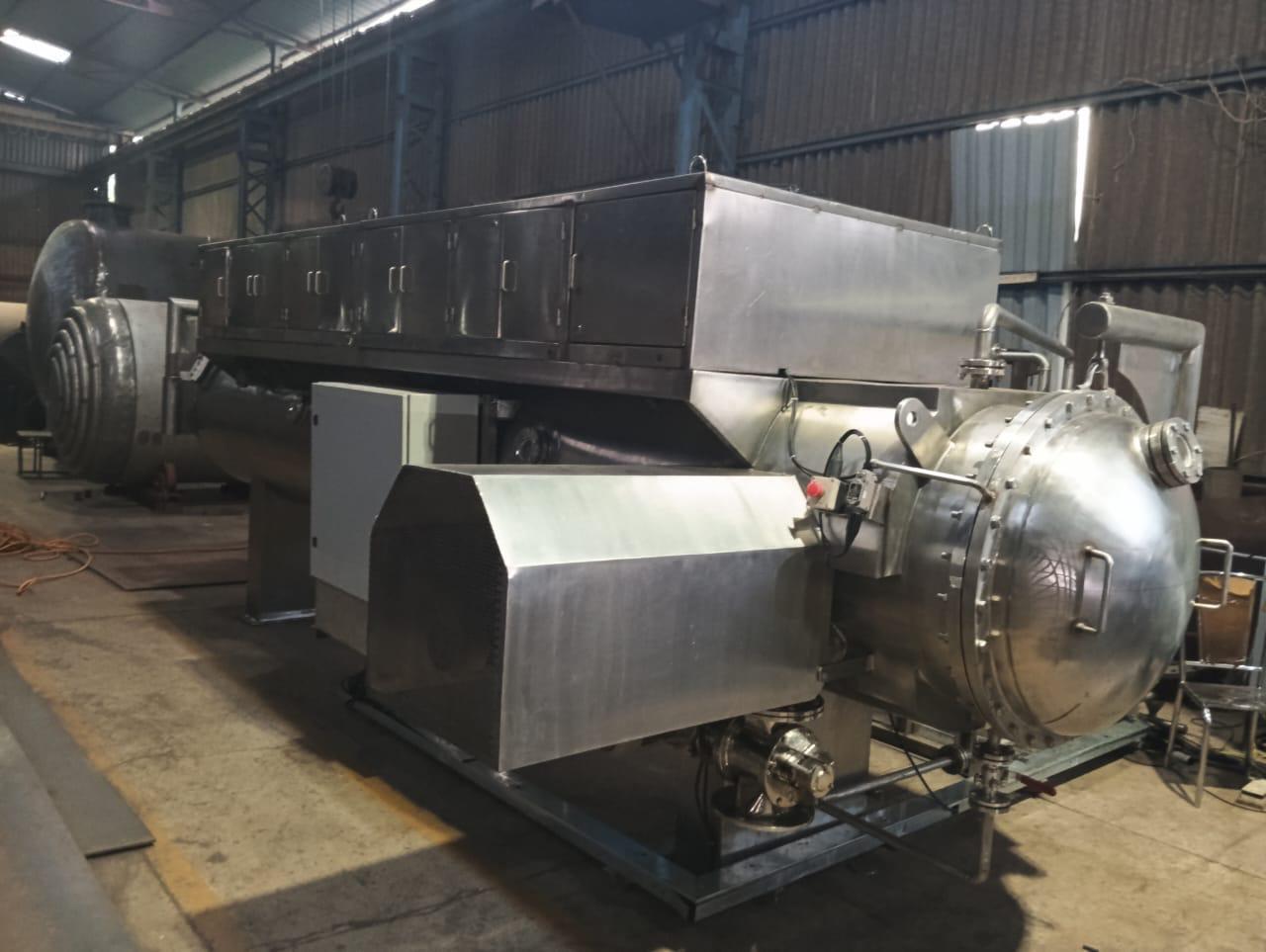
Vacuum Dryer
Click to view high-res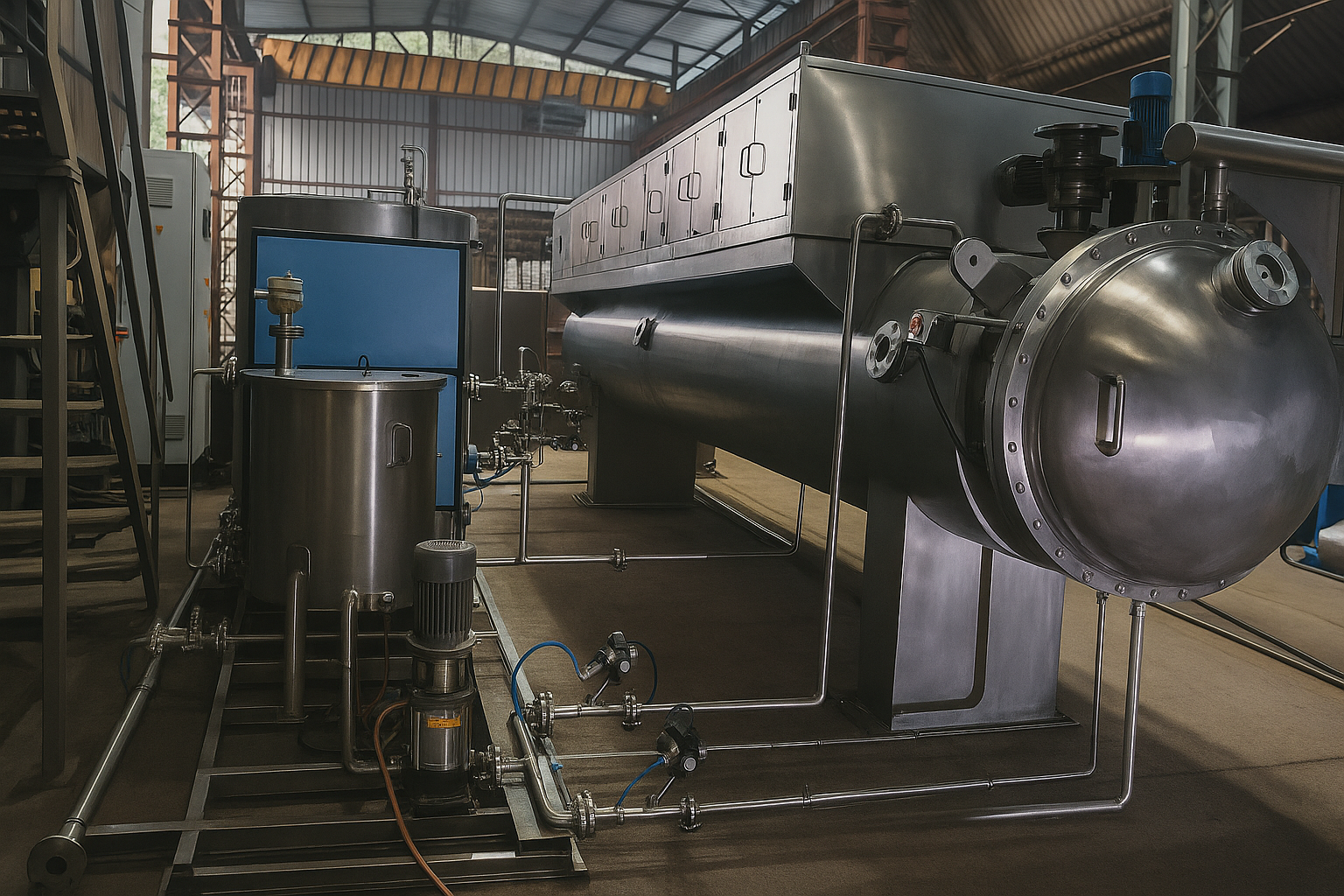
Vacuum Dryer
Click to view high-res
Vacuum Dryer
Click to view high-res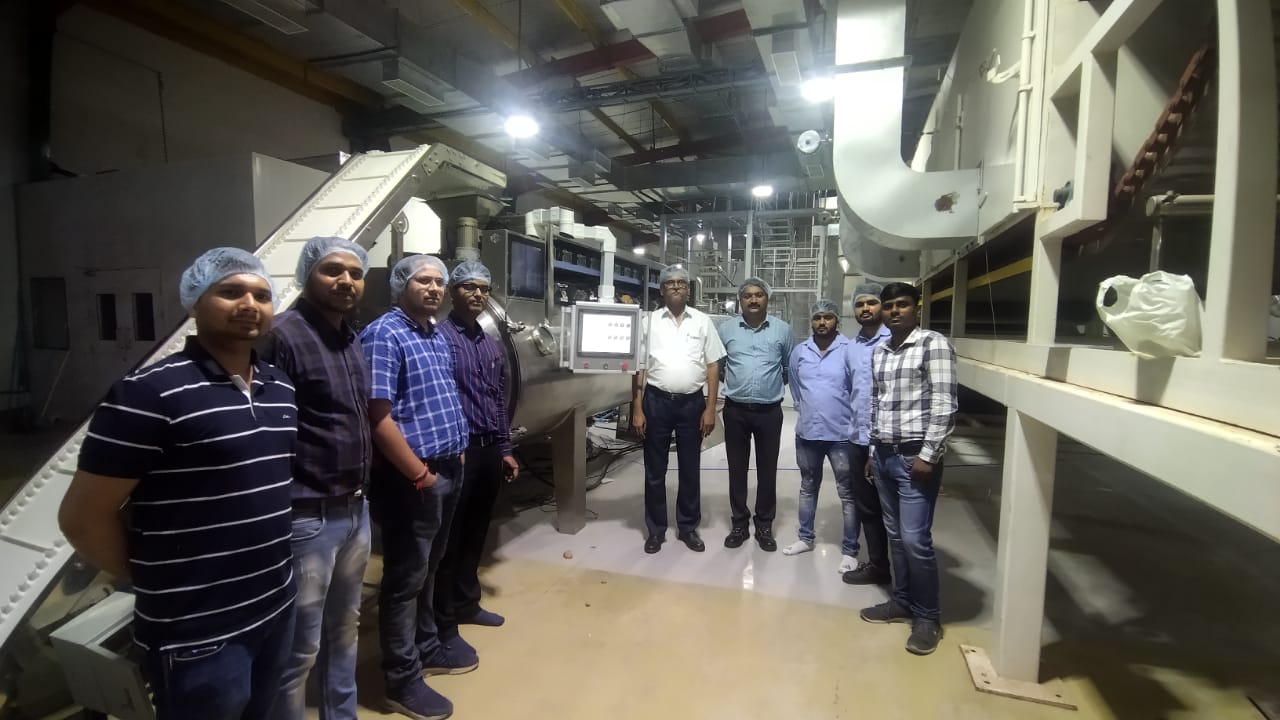
Vacuum Dryer
Click to view high-res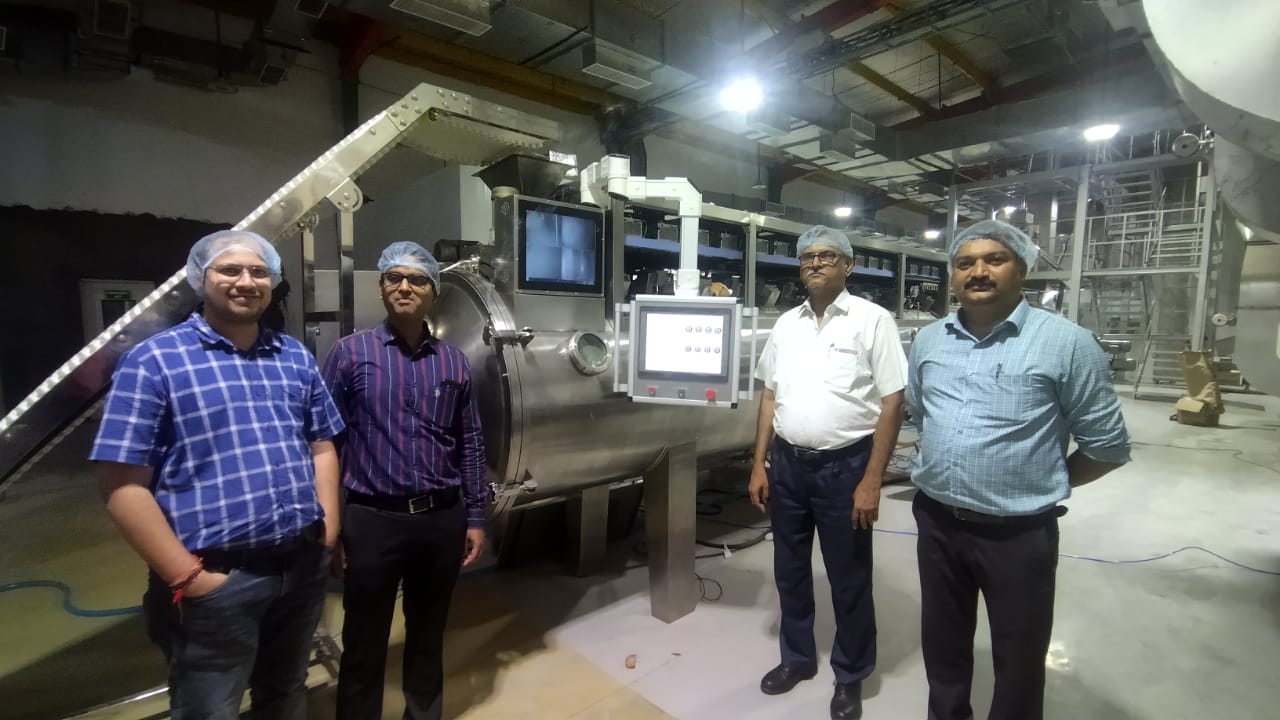
Vacuum Dryer
Click to view high-res50+ Years of Thermal Engineering Leadership.
Since 1976, Kerone Engineering Solutions has delivered over 5,000 custom-engineered thermal and process installations across 50+ countries. In technical collaboration with premier global institutions like CSIR-CEERI and University of Nottingham research partnerships, we design and manufacture high-efficiency machinery that minimizes production downtime and cuts operating expenses.
Unlike standard off-the-shelf equipment suppliers, Kerone operates a complete pilot-scale testing facility at our KRDC Ambernath center. We validate your exact raw material properties — determining moisture sorption isotherms, specific heat capacity, and dielectric behavior — before finalizing equipment sizing, ensuring zero risk during industrial scale-up.
Engineering precision, built into every system.
Gentle Drying
Operates under low temperature and high vacuum conditions for gentle drying.
Ensures High Product Quality
Ensures high product quality with minimal degradation or oxidation.
Custom-built Designs
Custom-built designs for specific industrial materials and moisture content.
Energy-efficient Performance
Energy-efficient performance with integrated vacuum and heating systems.
Easy Operation and Maintenance
Easy operation and maintenance with automation compatibility.
Uniform Drying Achieved Through
Uniform drying achieved through optimized heat transfer and vacuum levels.
Available in Batch or Continuous
Available in batch or continuous operation modes.
Durable Construction
Durable construction with long service life and process reliability.
Powered by AI, Machine Learning & Smart IoT Integration
Modern industrial processing requires unprecedented thermal precision, energy efficiency, and operational agility. Kerone equips each system with high-speed industrial edge computing controllers, multi-spectral non-contact infrared pyrometry, and proprietary closed-loop machine learning algorithms that continuously analyze process parameters in real time.
The intelligent automation stack monitors dynamic changes in incoming material load, bed thickness, moisture content, and environmental factors. In response, our algorithms dynamically adjust heater power arrays, generator frequency, conveyor drive velocities, and exhaust dampers within milliseconds — entirely eliminating product burn, under-processing, or thermal hotspotting.
Seamlessly integrated with factory-wide SCADA and enterprise ERP architectures via native MQTT, OPC-UA, and Modbus TCP protocols, our systems deliver complete digital recipe control, remote diagnostics, predictive maintenance alerting, and tamper-evident batch logs compliant with global FDA 21 CFR Part 11 and cGMP standards.
Adaptive Heat Modulation
Neural algorithms detect material thermal variations in real time (<50ms response) and tune generator frequency and power arrays automatically.
IoT Cloud Telemetry
Continuous bidirectional telemetry stream via MQTT/OPC-UA protocols directly to centralized plant SCADA, MES, or mobile engineer dashboards.
Predictive Maintenance
Monitors magnetron cathode current, vibration frequency signatures, and differential filter pressure to schedule AMC maintenance before failures occur.
Quality & Batch Traceability
Automated digital recipe execution, multi-stage temperature ramp/soak curves, and cryptographically signed electronic batch logs compliant with 21 CFR Part 11.
Engineered for High-Value Industrial Sectors
Tailored thermal and process configurations across continuous manufacturing lines.
Pharmaceutical
Drying of heat-sensitive products, granules, and extracts.
Chemical
Processing of catalysts, pigments, resins, and solvents.
Food
Drying of flavoring agents, starch, and herbal extracts.
Industrial
Treatment of powders, slurries, and viscous materials.
Configured to Your Process Window
Technical parameter envelopes across industrial manufacturing and engineering architectures.
Frequently Asked Questions
Engineering answers regarding equipment sizing, integration, and process performance.
The decision usually comes down to the product's physical form and how much mechanical handling it can tolerate. Free-flowing granules or powders that sit stably on a shelf suit vacuum tray dryer, which offer the gentlest handling but the longest cycle times since there is no agitation to promote heat transfer. Pastes, wet cakes, and materials that would otherwise form a crust on a static surface need the continuous mixing of a paddle dryer to expose fresh surface area to the heated wall. Fragile crystals or granules that would break under paddle agitation, but still benefit from gentle tumbling, are better suited to a rotary or double-cone vacuum dryer. Choosing based on a general category like pharmaceutical or chemical, without considering the specific physical form, is the most common specification error.
Deeper vacuum lowers the boiling point of the solvent or water further, which is valuable for genuinely heat-sensitive products, but it is not automatically better for every application. Achieving and holding very deep vacuum requires larger, more expensive vacuum pumps and tighter sealing, and very low pressure can sometimes cause excessive foaming or splashing in certain liquid or paste formulations. The right vacuum level is the shallowest one that achieves the target drying temperature for the specific product's thermal sensitivity, going deeper than necessary adds capital and operating cost without improving the result. Process trials during equipment specification are the most reliable way to identify this point rather than assuming maximum vacuum is always the goal.
A vacuum dryer is designed for efficient moisture removal under vacuum, ensuring gentle drying of heat-sensitive materials.
It operates by lowering the pressure to reduce the boiling point of moisture, enabling drying at lower temperatures.
It offers energy savings, uniform drying, and protection for temperature-sensitive materials.
Industries like pharmaceutical, chemical, and food industries rely on these dryers for critical processes.
Yes, Kerone provides fully customizable designs based on product and process parameters.
The use of vacuum technology significantly reduces drying time and energy consumption.
Yes, Kerone’s systems can be equipped with condensers for solvent recovery.
Kerone designs its dryers with robust materials ensuring longevity and consistent operation.
When the product being dried contains organic solvents rather than water, integrated condensers recover the vaporized solvent for reuse or proper disposal instead of releasing it to atmosphere, which is typically required by environmental regulation in addition to being a real cost-saving opportunity in solvent-intensive processes like pharmaceutical intermediate drying. The condenser and associated cold trap need to be sized for the actual solvent load and its specific condensation temperature, since under-sizing leads to incomplete recovery and potential venting violations. Buyers processing solvent-wet material should treat solvent recovery sizing as a core specification item, not an optional add-on priced separately after the main vacuum system is selected.
The most common cause is uneven heat transfer across the batch material near the heated surface or jacket, which dries faster than material in the center or top of a static bed, particularly in vacuum tray dryers where there is no mechanical mixing to even things out. This shows up as batches that test correctly on average moisture but contain pockets of under-dried material that cause stability or quality failures downstream. Paddle or rotary configurations largely solve this through continuous mixing, but for tray systems, the fix is usually reducing tray loading depth and tightening shelf temperature uniformity rather than simply extending cycle time, which often fails to resolve a fundamentally uneven heat distribution problem.
Batch vacuum drying remains the standard for pharmaceutical and specialty chemical production because it supports the cleaning validation and lot traceability that regulated industries require between different products or campaigns. Continuous vacuum belt drying becomes attractive once volume is high and consistent enough that changeover flexibility matters less than throughput and labor efficiency, common in larger-scale food or chemical intermediate production. Processors anticipating significant volume growth should evaluate at what throughput level the labour and cycle-time efficiency of continuous operation would outweigh the flexibility batch operation currently provides, rather than defaulting to batch indefinitely simply because that is the current method.
Vacuum integrity depends entirely on seal condition, and door gaskets, shaft seals on paddle or rotary units, and valve seats degrade gradually in ways that are not always obvious until vacuum pump run time and cycle duration start creeping upward. Routine vacuum leak-down testing, rather than waiting for a visible performance problem, catches seal degradation early enough to schedule replacement during planned downtime instead of an unplanned production stoppage. Vacuum pump oil condition and condenser fouling are the other two most common sources of gradually declining performance, and both benefit from a fixed inspection interval tied to operating hours rather than a calendar-based schedule alone.

Let’s Engineer the Right Process.
From application trials to full-scale production systems, our engineering team works with you to develop the right thermal processing solution for your material, throughput, and production requirements.