
Spray Dryer
At Kerone, we produce spray dryers that can be fall in various range based on the complexity of design from simple to very complex, all depends on the fluid or slurries under processing.
Engineered precision for Spray Dryer.
At Kerone, we produce spray dryers that can be fall in various range based on the complexity of design from simple to very complex, all depends on the fluid or slurries under processing. The difference in the designs rare the in atomization, pattern of airstream, air heating systems/technique, and separation and collection unit.
Spray dryers mainly comprises of drying chamber, atomization and dispersion means to feed fluid in small droplets into the drying chamber, air heating system, and separation unit to collect dried output. With over five decades of expertise, Kerone has established itself as a global leader in designing and manufacturing spray dryer tailored to industrial needs.
The spray dryer is engineered to provide rapid and efficient drying through innovative heat transfer methods, ensuring precise moisture control and uniform output quality.
Hot air in a spray drying system can be generated through direct gas firing, liquid fuels, or by using efficient heat exchangers. For atomization, pressure spray nozzles, rotary nozzles, and centrifugal atomizers are used to distribute the liquid feed into fine droplets. The dried product is separated using cyclone separators, where air enters laterally at the top, or through a settling chamber where airflow direction is reversed to allow gravity-based separation of dried particles.
Kerone has extensive experience in designing and manufacturing spray drying units suitable for diverse industrial applications. Over the years, we have successfully supported numerous clients with customized drying solutions. Our skilled engineering team and stringent quality manufacturing processes ensure high accuracy, efficiency, and superior product quality.
Our advanced AI, ML, and IoT technologies, this solution delivers smarter automation, real-time insights, and predictive intelligence to enhance efficiency and drive future-ready growth.
The thermodynamic architecture of our Spray Dryer incorporates advanced thermal modeling and computational fluid dynamics (CFD) to ensure optimal heat and mass transfer across the entire processing zone. By precisely controlling thermal gradients, air velocity profiles, and direct energy delivery mechanisms, the system achieves uniform treatment while preventing localized overheating, product degradation, or thermal stress. This balance of intensive heat transfer and controlled retention time ensures maximum operational throughput with minimal specific energy consumption.
Built with heavy-duty structural engineering and sanitary metallurgy, each unit is manufactured to withstand continuous 24/7 industrial operating conditions. Contact surfaces are finished in high-grade stainless steel (SS 304, SS 316L, or corrosion-resistant alloys) with sanitary mirror-polish options, CIP/SIP washdown provisions, and hermetic chamber sealing. This guarantees full compliance with stringent international hygiene, CE machinery directives, and cGMP standards across food, pharmaceutical, specialty chemical, and heavy manufacturing applications.
Proprietary control algorithms ensure strict process repeatability, while built-in safety interlocks and electromagnetic shielding comply with international CE and OSHA standards. Full process development support — including material loss tangent testing, moisture sorption isotherms, and pilot trials at our Ambernath R&D facility — ensures the selected technology matches your exact industrial throughput goals.
Product & Systems Gallery
Explore authentic high-resolution photographs of industrial machinery, pilot trial rigs, and continuous turnkey processing installations engineered by Kerone Engineering Solutions for Spray Dryer. Each system is fabricated at our ISO 9001:2015 certified manufacturing facilities with precision laser cutting, robotic welding, and stringent Factory Acceptance Testing (FAT).

Spray Dryer
Click to view high-res
Spray Dryer
Click to view high-res
Spray Dryer
Click to view high-res
Spray Dryer
Click to view high-res
Spray Dryer
Click to view high-res
Spray Dryer
Click to view high-res
Spray Dryer
Click to view high-res
Spray Dryer
Click to view high-res
Spray Dryer
Click to view high-res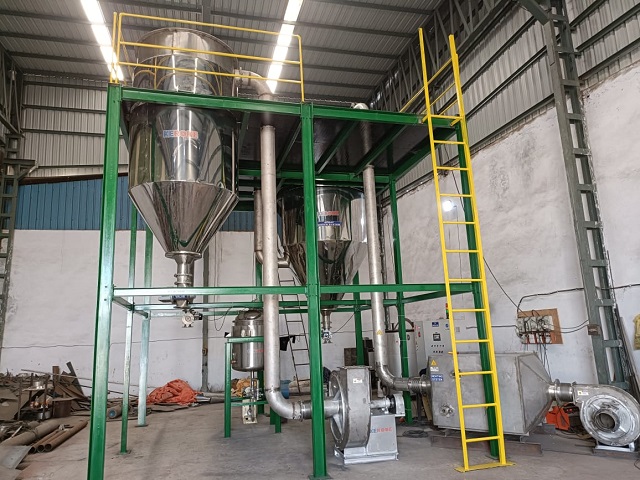
Spray Dryer
Click to view high-res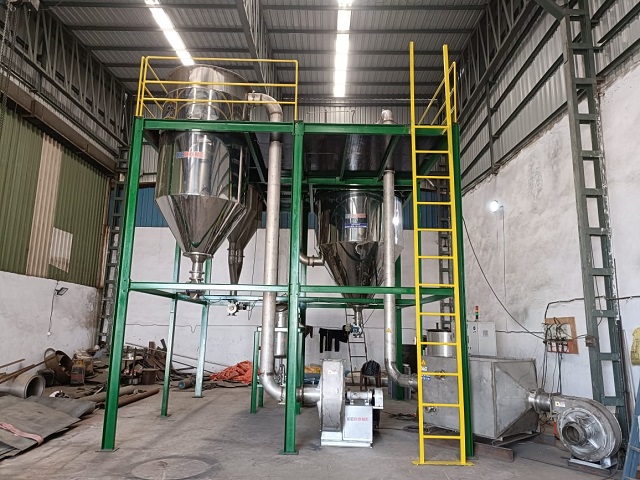
Spray Dryer
Click to view high-res
Spray Dryer
Click to view high-res50+ Years of Thermal Engineering Leadership.
Since 1976, Kerone Engineering Solutions has delivered over 5,000 custom-engineered thermal and process installations across 50+ countries. In technical collaboration with premier global institutions like CSIR-CEERI and University of Nottingham research partnerships, we design and manufacture high-efficiency machinery that minimizes production downtime and cuts operating expenses.
Unlike standard off-the-shelf equipment suppliers, Kerone operates a complete pilot-scale testing facility at our KRDC Ambernath center. We validate your exact raw material properties — determining moisture sorption isotherms, specific heat capacity, and dielectric behavior — before finalizing equipment sizing, ensuring zero risk during industrial scale-up.
Engineering precision, built into every system.
High Drying Rate
High drying rate with efficient heat transfer design.
Energy-efficient Operation
Energy-efficient operation with controlled temperature settings.
Ideal for Heat-sensitive and
Ideal for heat-sensitive and moisture-rich materials.
Fully Automated Operation
Fully automated operation with minimal manual intervention.
Robust Construction Suitable
Robust construction suitable for continuous operation.
Uniform Drying Ensuring Product
Uniform drying ensuring product consistency.
Flexible Design Adaptable
Flexible design adaptable for various industries.
Reduced Operational Downtime and
Reduced operational downtime and maintenance costs.
Powered by AI, Machine Learning & Smart IoT Integration
Modern industrial processing requires unprecedented thermal precision, energy efficiency, and operational agility. Kerone equips each system with high-speed industrial edge computing controllers, multi-spectral non-contact infrared pyrometry, and proprietary closed-loop machine learning algorithms that continuously analyze process parameters in real time.
The intelligent automation stack monitors dynamic changes in incoming material load, bed thickness, moisture content, and environmental factors. In response, our algorithms dynamically adjust heater power arrays, generator frequency, conveyor drive velocities, and exhaust dampers within milliseconds — entirely eliminating product burn, under-processing, or thermal hotspotting.
Seamlessly integrated with factory-wide SCADA and enterprise ERP architectures via native MQTT, OPC-UA, and Modbus TCP protocols, our systems deliver complete digital recipe control, remote diagnostics, predictive maintenance alerting, and tamper-evident batch logs compliant with global FDA 21 CFR Part 11 and cGMP standards.
Adaptive Heat Modulation
Neural algorithms detect material thermal variations in real time (<50ms response) and tune generator frequency and power arrays automatically.
IoT Cloud Telemetry
Continuous bidirectional telemetry stream via MQTT/OPC-UA protocols directly to centralized plant SCADA, MES, or mobile engineer dashboards.
Predictive Maintenance
Monitors magnetron cathode current, vibration frequency signatures, and differential filter pressure to schedule AMC maintenance before failures occur.
Quality & Batch Traceability
Automated digital recipe execution, multi-stage temperature ramp/soak curves, and cryptographically signed electronic batch logs compliant with 21 CFR Part 11.
Engineered for High-Value Industrial Sectors
Tailored thermal and process configurations across continuous manufacturing lines.
Kerone’s spray dryer exemplify inno...
Kerone’s spray dryer exemplify innovation and quality. Built with advanced materials and intelligent controls, they ensure maximum efficiency, durability, and adaptability. Kerone continues to pioneer industrial drying solutions that combine technology with sustainability, empowering industries with precision drying performance.
Spray dryers are widely used in dai...
Spray dryers are widely used in dairy production and milk processing. They help convert liquid milk into fine powder form while maintaining nutritional value and quality. This process is essential for large-scale dairy industries.
They are commonly used for the prod...
They are commonly used for the production of powdered milk, including skimmed milk powder and whole milk powder. Spray drying ensures longer shelf life, easy storage, and convenient transportation of milk products.
In the food industry, spray dryers ...
In the food industry, spray dryers are used for processing egg-based products. Liquid eggs can be transformed into stable powder form, which is easier to handle and store.
Spray dryers also play an important...
Spray dryers also play an important role in the production of sweets and edible acids. They help create uniform powder products with consistent texture and moisture levels.
For beverage applications, spray dr...
For beverage applications, spray dryers are used in the processing of coffee and tea whiteners. They produce fine, soluble powders that dissolve easily in hot beverages.
In the bakery industry, spray dryer...
In the bakery industry, spray dryers are used for wheat- and corn-based products. They help convert liquid mixtures into dry powder ingredients used in various baked goods.
The pharmaceutical industry uses sp...
The pharmaceutical industry uses spray dryers in tablet production. They are effective in converting liquid formulations into dry powders, which are later compressed into tablets.
Spray dryers are also widely used i...
Spray dryers are also widely used in the manufacturing of dye colors, food colors, and paint pigments. They ensure consistent particle size and better color stability.
In the soap and detergent industry,...
In the soap and detergent industry, spray dryers are essential for producing detergent powders. The technology ensures uniform granules with controlled moisture content.
The fertilizer industry utilizes sp...
The fertilizer industry utilizes spray dryers for producing products such as nitrates, ammonium salts, and phosphates. Spray drying helps create free-flowing fertilizer granules.
Additionally, spray dryers are very...
Additionally, spray dryers are very useful for drying chemicals such as citric acid, borax, sodium phosphate, hexamine, gelatine, and various plant extracts. The process ensures high-quality, stable powder products suitable for industrial use.
Configured to Your Process Window
Technical parameter envelopes across industrial manufacturing and engineering architectures.
Frequently Asked Questions
Engineering answers regarding equipment sizing, integration, and process performance.
A spray dryer is a system that removes moisture using controlled heat and airflow for uniform drying results.
It operates through a process of heat transfer and air circulation to evaporate moisture from materials efficiently.
It provides high efficiency, uniform drying, and low energy consumption.
Industries such as food, chemical, pharmaceutical, and textile rely heavily on these dryers.
Yes, Kerone designs systems tailored to specific process and material needs.
The design ensures quick cleaning and minimal servicing requirements.
Kerone’s systems are optimized for reduced power consumption and higher heat utilization.
Yes, they are available in lab, pilot, and industrial models to suit all capacities.
Dairy and food processing, pharmaceuticals, detergents, ceramics, agrochemicals, and specialty chemicals are the primary users of spray dryers. The reason is that spray drying converts a liquid feed into a dry powder in a single continuous operation, in seconds, while preserving heat-sensitive components. No other single drying technology achieves this combination. For products like infant formula, encapsulated flavours, and inhalation drug powders, the control over particle morphology, size, and moisture content that spray drying offers is unmatched. Competing technologies like drum drying or freeze drying either damage product quality or are economically prohibitive at large production volumes.
Outlet air temperature is the primary control parameter for residual moisture in the final powder. It is maintained by adjusting the feed flow rate rather than the inlet air temperature, because inlet temperature is typically set to a fixed value that balances drying rate and thermal sensitivity. When outlet temperature rises above setpoint, feed rate is increased. When it falls below setpoint, feed rate is reduced. Modern spray dryers use PID-controlled peristaltic or centrifugal feed pumps coupled to the outlet temperature measurement for closed-loop control. Kerone integrates this control into the PLC system with recipe storage, allowing repeatable moisture targets across production batches.
Scale-up from lab-scale to production spray dryers is not linear and requires careful engineering. The key scale-up parameter is the specific evaporation rate; kilograms of water evaporated per cubic metre of chamber volume per hour. However, droplet trajectory, residence time, and wall deposition behaviour change with chamber diameter and height. Kerone operates a pilot-scale spray dryer at its R&D centre where customers can run trials with actual feed material to generate scale-up data. Parameters like inlet temperature, feed rate, atomiser speed, and outlet temperature from the pilot trial are used in proprietary scale-up calculations to specify production chamber dimensions, airflow volumes, and heater capacity.
In a co-current spray dryer, hot inlet air and atomised feed enter from the same end and travel in the same direction. Droplets contact the hottest air first but are protected from high temperatures by evaporative cooling, making this configuration suitable for heat-sensitive materials. Counter-current designs introduce hot air from the bottom while feed is atomised from the top, resulting in longer particle residence time and lower outlet moisture, preferred for materials that need very low final moisture and can tolerate higher temperatures. Mixed-flow designs combine both principles. The large majority of food and pharmaceutical spray dryers worldwide use co-current flow because it is the gentlest to the product.
Yes. Spray dryers can be configured with integrated fluid bed chambers (spray-fluid bed or spray-fluidised bed agglomerators) at the base of the drying chamber. In this configuration, partially dried particles from the spray stage fall into a fluidised bed zone where they contact other particles and form agglomerates before final drying. This produces a porous, open-structure powder with superior instant dispersibility in water, the characteristic of 'instantised' products like coffee creamers, infant formula, and instant soup powders. Fines returned from the cyclone can be re-introduced into the agglomeration zone to improve yield and produce a more uniform granule structure.

Let’s Engineer the Right Process.
From application trials to full-scale production systems, our engineering team works with you to develop the right thermal processing solution for your material, throughput, and production requirements.