Environmental & Green Solutions
Comprehensive engineering technologies designed to minimize industrial environmental impact, convert waste into resources, and achieve zero liquid discharge.
Engineered precision for Environmental & Green Solutions.
Kerone’s Environmental & Green Solutions encompass a comprehensive range of technologies and systems designed to minimize the environmental impact of industrial operations, convert waste into resources, and support the transition to a sustainable, circular economy. From industrial effluent treatment and zero liquid discharge systems to waste heat recovery, air pollution control, and renewable energy integration, Kerone brings proven engineering solutions to the challenge of making industry cleaner, greener, and more resource-efficient. Each solution is designed with life-cycle environmental impact in mind, ensuring that environmental performance improvements also translate into long-term economic benefits for clients.
Our advanced AI, ML, and IoT technologies, this solution delivers smarter automation, real-time insights, and predictive intelligence to enhance efficiency and drive future-ready growth.
Continuous tracking of process parameters with instant adjustments.
Intelligent fault detection to prevent failures before they occur.
Dynamic tuning of operations for maximum output and efficiency.
The thermodynamic architecture of our Environmental & Green Solutions incorporates advanced thermal modeling and computational fluid dynamics (CFD) to ensure optimal heat and mass transfer across the entire processing zone. By precisely controlling thermal gradients, air velocity profiles, and direct energy delivery mechanisms, the system achieves uniform treatment while preventing localized overheating, product degradation, or thermal stress. This balance of intensive heat transfer and controlled retention time ensures maximum operational throughput with minimal specific energy consumption.
Built with heavy-duty structural engineering and sanitary metallurgy, each unit is manufactured to withstand continuous 24/7 industrial operating conditions. Contact surfaces are finished in high-grade stainless steel (SS 304, SS 316L, or corrosion-resistant alloys) with sanitary mirror-polish options, CIP/SIP washdown provisions, and hermetic chamber sealing. This guarantees full compliance with stringent international hygiene, CE machinery directives, and cGMP standards across food, pharmaceutical, specialty chemical, and heavy manufacturing applications.
Proprietary control algorithms ensure strict process repeatability, while built-in safety interlocks and electromagnetic shielding comply with international CE and OSHA standards. Full process development support — including material loss tangent testing, moisture sorption isotherms, and pilot trials at our Ambernath R&D facility — ensures the selected technology matches your exact industrial throughput goals.
Product & Systems Gallery
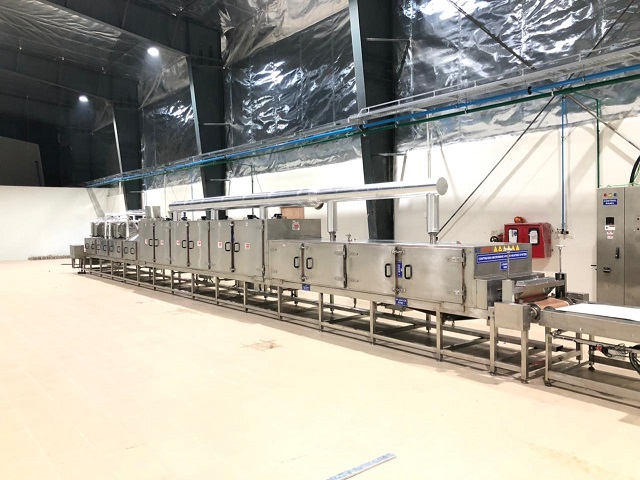
Explore authentic high-resolution photographs of industrial machinery, pilot trial rigs, and continuous turnkey processing installations engineered by Kerone Engineering Solutions for Environmental & Green Solutions. Each system is fabricated at our ISO 9001:2015 certified manufacturing facilities with precision laser cutting, robotic welding, and stringent Factory Acceptance Testing (FAT).
Environmental & Green Solutions
Click to view high-res
Environmental & Green Solutions
Click to view high-res
Environmental & Green Solutions
Click to view high-res
Environmental & Green Solutions
Click to view high-res
Environmental & Green Solutions
Click to view high-res
Environmental & Green Solutions
Click to view high-res50+ Years of Thermal Engineering Leadership.
Since 1976, Kerone Engineering Solutions has delivered over 5,000 custom-engineered thermal and process installations across 50+ countries. In technical collaboration with premier global institutions like CSIR-CEERI and University of Nottingham research partnerships, we design and manufacture high-efficiency machinery that minimizes production downtime and cuts operating expenses.
Unlike standard off-the-shelf equipment suppliers, Kerone operates a complete pilot-scale testing facility at our KRDC Ambernath center. We validate your exact raw material properties — determining moisture sorption isotherms, specific heat capacity, and dielectric behavior — before finalizing equipment sizing, ensuring zero risk during industrial scale-up.
Engineering precision, built into every system.
Zero Liquid Discharge (ZLD) Systems
Zero Liquid Discharge (ZLD) systems for complete wastewater elimination and water recovery
High-efficiency Air Pollution Control
High-efficiency air pollution control with bag filters, wet scrubbers, and electrostatic precipitators
Waste Heat Recovery Systems
Waste heat recovery systems for converting exhaust heat into usable energy
Solvent Recovery Units
Solvent recovery units for reclaiming and reusing process solvents to reduce emissions and costs
Automated Online Monitoring with CEMS
Automated online monitoring with CEMS for real-time emission compliance verification
Biogas and Composting Plants
Biogas and composting plants for organic waste valorization and renewable energy generation
Environmental Impact Assessments
ISO 14001 and regulatory compliance support including environmental impact assessments
Sustainability Programs
Life-cycle cost analysis and carbon footprint reduction reporting for sustainability programs
Powered by AI, Machine Learning & Smart IoT Integration
Modern industrial processing requires unprecedented thermal precision, energy efficiency, and operational agility. Kerone equips each system with high-speed industrial edge computing controllers, multi-spectral non-contact infrared pyrometry, and proprietary closed-loop machine learning algorithms that continuously analyze process parameters in real time.
The intelligent automation stack monitors dynamic changes in incoming material load, bed thickness, moisture content, and environmental factors. In response, our algorithms dynamically adjust heater power arrays, generator frequency, conveyor drive velocities, and exhaust dampers within milliseconds — entirely eliminating product burn, under-processing, or thermal hotspotting.
Seamlessly integrated with factory-wide SCADA and enterprise ERP architectures via native MQTT, OPC-UA, and Modbus TCP protocols, our systems deliver complete digital recipe control, remote diagnostics, predictive maintenance alerting, and tamper-evident batch logs compliant with global FDA 21 CFR Part 11 and cGMP standards.
Adaptive Heat Modulation
Neural algorithms detect material thermal variations in real time (<50ms response) and tune generator frequency and power arrays automatically.
IoT Cloud Telemetry
Continuous bidirectional telemetry stream via MQTT/OPC-UA protocols directly to centralized plant SCADA, MES, or mobile engineer dashboards.
Predictive Maintenance
Monitors magnetron cathode current, vibration frequency signatures, and differential filter pressure to schedule AMC maintenance before failures occur.
Quality & Batch Traceability
Automated digital recipe execution, multi-stage temperature ramp/soak curves, and cryptographically signed electronic batch logs compliant with 21 CFR Part 11.
Engineered for High-Value Industrial Sectors
Tailored thermal and process configurations across continuous manufacturing lines.
Industrial Effluent & ZLD
Industrial effluent treatment and zero liquid discharge for textile, chemical, and pharma industries.
Air Pollution Control
Air pollution control for cement, steel, power, and chemical manufacturing operations.
Waste Heat Recovery
Waste heat recovery from industrial furnaces, kilns, and boilers for energy cost reduction.
Solvent Recovery & Recycling
Solvent recovery and recycling in pharmaceutical and specialty chemical manufacturing.
Biogas & Waste Valorization
Organic waste to biogas conversion for food processing and municipal waste facilities.
Water Footprint Reduction
Rainwater harvesting, water recycling, and water footprint reduction for manufacturing sites.
Configured to Your Process Window
Technical parameter envelopes across industrial manufacturing and engineering architectures.
Frequently Asked Questions
Engineering answers regarding equipment sizing, integration, and process performance.
ZLD is an advanced wastewater treatment approach where all industrial effluent is processed to recover clean water and solid salts with zero discharge to the environment. Kerone designs complete ZLD systems tailored to specific industry effluent characteristics.
Kerone's APC systems handle particulate matter, SO2, NOx, HCl, ammonia, VOCs, and heavy metals through technologies including bag filters, wet scrubbers, catalytic converters, and activated carbon filters.
Yes, Kerone's waste heat recovery systems can recover 60–80% of exhaust heat from furnaces, kilns, and boilers, converting it to steam, hot water, or electricity to significantly reduce energy costs.
Kerone designs systems compliant with CPCB (India), EPA (US), EU Industrial Emissions Directive (IED), WHO, and other applicable local and international environmental standards.
Yes, Kerone provides CEMS (Continuous Emission Monitoring Systems) and online effluent quality analyzers with automated reporting and alarm systems for regulatory compliance.
Yes, Kerone designs anaerobic digestion (biogas) and composting systems that convert food waste, agricultural residues, and sewage sludge into renewable energy and soil amendment products.
Return on investment for Kerone's environmental systems typically ranges from 2 to 5 years, driven by energy savings, water recovery, reduced disposal costs, and avoidance of regulatory penalties.
Effluent treatment plants need regular cleaning of clarifiers and filtration media, periodic replacement of membrane elements in advanced systems like reverse osmosis used in ZLD configurations, and calibration of online dosing pumps and quality analyzers. Air pollution control systems require bag filter replacement on a schedule determined by particulate loading, scrubber liquid chemistry monitoring and replenishment, and electrostatic precipitator electrode cleaning to maintain collection efficiency. Sludge and sediment removal from treatment tanks is an ongoing operational task rather than a periodic maintenance item. Kerone designs systems with accessible service points for filter and membrane replacement specifically because these consumables have shorter life cycles than the structural equipment, and a maintenance plan that anticipates this difference keeps compliance monitoring continuous rather than interrupted by unplanned service stoppages.
Structural components of effluent treatment plants and air pollution control systems, including tanks, ductwork, and precipitator housings, are typically engineered for 20 to 25 years of service with proper maintenance. Membrane elements in reverse osmosis or ultrafiltration systems used in advanced wastewater treatment have a shorter functional life, generally 3 to 7 years depending on feed water quality and fouling rates, and represent the main recurring capital cost over the system's lifetime. Bag filters and scrubber internals also need periodic replacement well before the overall system reaches end of life. Corrosion-resistant materials of construction, appropriate to the specific effluent or flue gas chemistry, significantly affect actual service life, which is why Kerone selects materials based on the specific chemical environment rather than applying a generic specification across all projects.
Yes, Kerone integrates solar thermal, biomass boilers, and biogas systems into industrial facilities to reduce dependence on fossil fuels and lower the overall carbon footprint of operations.
A common mistake is sizing the system for current production volume without margin for growth, which forces costly capacity upgrades within a few years of installation. Companies sometimes select treatment technology based on lowest initial capital cost without accounting for higher operating costs from energy-intensive processes or expensive consumables like membrane replacements, resulting in a higher total cost of ownership than a more capital-intensive but operationally efficient alternative. Another frequent error is failing to characterize effluent or emission streams thoroughly before specifying treatment technology, leading to systems that struggle with seasonal variation in waste stream composition. Skipping pilot testing on actual plant effluent before finalizing a treatment process design, particularly for unusual or variable waste streams, often results in underperformance once the system is operating at full scale.
Kerone integrates environmental systems as parallel processes that treat waste streams generated by production rather than systems that interrupt the production line itself, so core manufacturing operations continue uninterrupted during normal environmental system operation. Installation and commissioning are typically phased around planned maintenance windows to avoid unplanned production stoppages. Redundancy in critical components, such as backup pumps or parallel treatment trains, allows maintenance on one unit while the system continues operating. For retrofits into existing facilities, Kerone plans tie-in points and piping routes to minimize the duration of any required production pause during installation. The goal throughout is treating environmental compliance as an operational addition to the existing plant rather than a disruption requiring production downtime, since most environmental investments are driven by regulatory deadlines that don't allow for extended shutdowns.
A common misconception is that ZLD systems are prohibitively expensive and only justified by regulatory mandate, when in practice water recovery from ZLD can offset a meaningful portion of operating costs in water-scarce regions or industries with high freshwater procurement costs. Another misconception is that effluent treatment systems require constant manual oversight, when modern systems with automated dosing, online quality analyzers, and remote monitoring need far less hands-on operator time than older manual treatment plants. Some buyers assume all effluent treatment technologies are interchangeable, when the appropriate technology depends heavily on the specific pollutant load, whether biological, chemical, or physical treatment dominates the required process. Understanding that effluent characteristics, not generic industry category, should drive technology selection helps avoid both over-engineering and underperforming system designs.
Beyond compliance-driven effluent treatment, Kerone designs rainwater harvesting systems that capture and store roof and surface runoff for non-potable industrial use, condensate recovery systems that reclaim water from cooling towers and process steam, and greywater recycling systems that treat lightly contaminated water from washing or rinsing operations for reuse in non-critical applications. These systems reduce a facility's freshwater procurement volume and wastewater discharge volume simultaneously, which is particularly valuable in water-stressed regions facing tightening municipal water allocation or rising water tariffs. Combined with ZLD or partial water recovery from the main effluent treatment system, these supplementary measures can substantially reduce a facility's net water footprint. Kerone typically evaluates a facility's complete water balance, not just its discharge stream, when designing a comprehensive water management strategy.
Yes, Kerone designs effluent treatment and air pollution control systems with modular treatment trains and expansion-ready civil and piping layouts, so additional treatment capacity can be added as production volume grows without redesigning the entire system from scratch. Membrane-based systems scale relatively easily by adding parallel membrane skids, while biological treatment systems require more careful expansion planning since biological process capacity doesn't scale linearly with simple equipment addition. Air pollution control systems can often accommodate increased flow by adding parallel filter or scrubber modules rather than replacing the entire system. Planning for this scalability at the initial design stage, including reserving space and utility capacity for future expansion, is significantly cheaper than retrofitting expansion capability into a system that wasn't designed with growth in mind.
Let’s Engineer the Right Process.
From application trials to full-scale production systems, our engineering team works with you to develop the right thermal processing solution for your material, throughput, and production requirements.