Box Dryer
KERONE is pioneer in designing and manufacturing the box type dryers for various type of processes.
Engineered precision for Box Dryer.
KERONE is pioneer in designing and manufacturing the box type dryers for various type of processes. We are helping our clients with our engineering solutions since last 50 years, our huge experience and commitment to quality had made us the first preference of clients for their need of heating, drying or cooling.
Till now we have manufactured various types of box dryers by keeping need of client at front. We hold proficiency in designing and manufacturing box dryer, these dryers are highly values by the pharmaceuticals, foods, chemicals, sludge and other Industries. With over four decades of expertise, Kerone has established itself as a global leader in designing and manufacturing box dryer tailored to industrial needs.
The box dryer is engineered to provide rapid and efficient drying through innovative heat transfer methods, ensuring precise moisture control and uniform output quality.
Material to be processed in a box dryer is loaded into trays or containers and inserted into the dryer for a specified time duration. Box dryers are constructed with a double-walled cabinet, typically featuring one or two doors. The space between the two walls is filled with fiberglass wool insulation to minimize heat loss during the drying process and ensure higher energy efficiency.
Our advanced AI, ML, and IoT technologies, this solution delivers smarter automation, real-time insights, and predictive intelligence to enhance efficiency and drive future-ready growth.
Continuous tracking of process parameters with instant adjustments.
Intelligent fault detection to prevent failures before they occur.
The thermodynamic architecture of our Box Dryer incorporates advanced thermal modeling and computational fluid dynamics (CFD) to ensure optimal heat and mass transfer across the entire processing zone. By precisely controlling thermal gradients, air velocity profiles, and direct energy delivery mechanisms, the system achieves uniform treatment while preventing localized overheating, product degradation, or thermal stress. This balance of intensive heat transfer and controlled retention time ensures maximum operational throughput with minimal specific energy consumption.
Built with heavy-duty structural engineering and sanitary metallurgy, each unit is manufactured to withstand continuous 24/7 industrial operating conditions. Contact surfaces are finished in high-grade stainless steel (SS 304, SS 316L, or corrosion-resistant alloys) with sanitary mirror-polish options, CIP/SIP washdown provisions, and hermetic chamber sealing. This guarantees full compliance with stringent international hygiene, CE machinery directives, and cGMP standards across food, pharmaceutical, specialty chemical, and heavy manufacturing applications.
Proprietary control algorithms ensure strict process repeatability, while built-in safety interlocks and electromagnetic shielding comply with international CE and OSHA standards. Full process development support — including material loss tangent testing, moisture sorption isotherms, and pilot trials at our Ambernath R&D facility — ensures the selected technology matches your exact industrial throughput goals.
Product & Systems Gallery
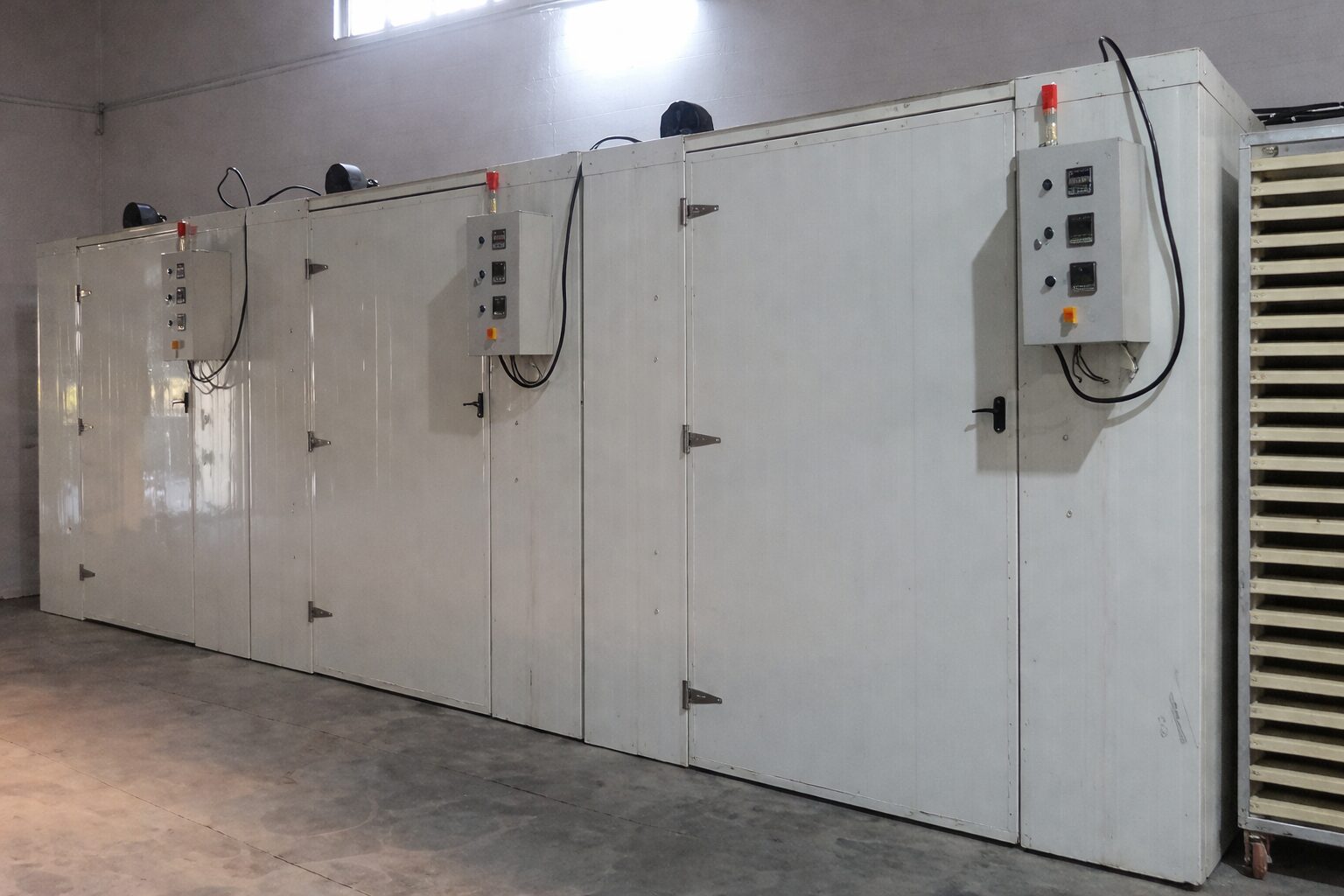
Explore authentic high-resolution photographs of industrial machinery, pilot trial rigs, and continuous turnkey processing installations engineered by Kerone Engineering Solutions for Box Dryer. Each system is fabricated at our ISO 9001:2015 certified manufacturing facilities with precision laser cutting, robotic welding, and stringent Factory Acceptance Testing (FAT).
Box Dryer
Click to view high-res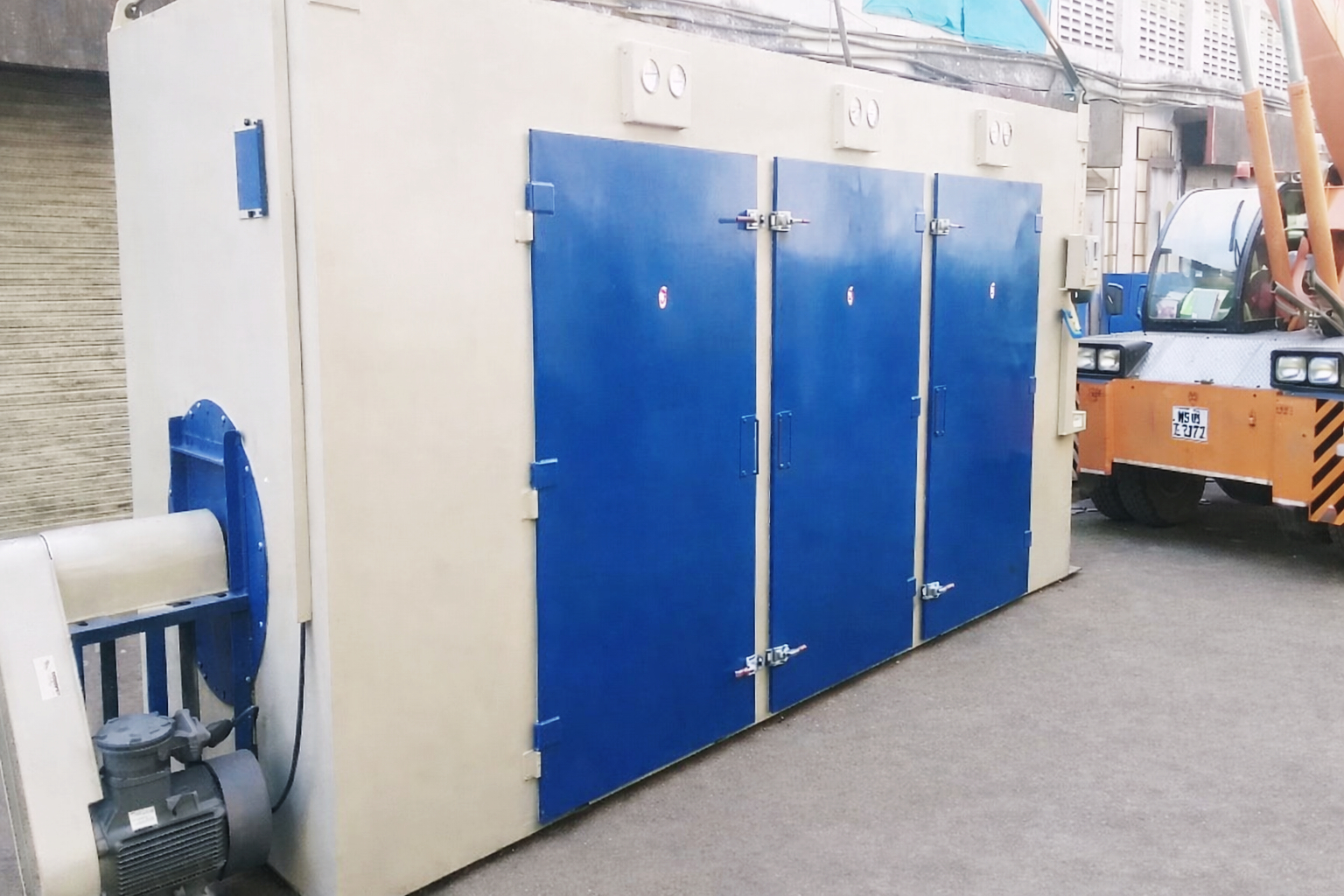
Box Dryer
Click to view high-res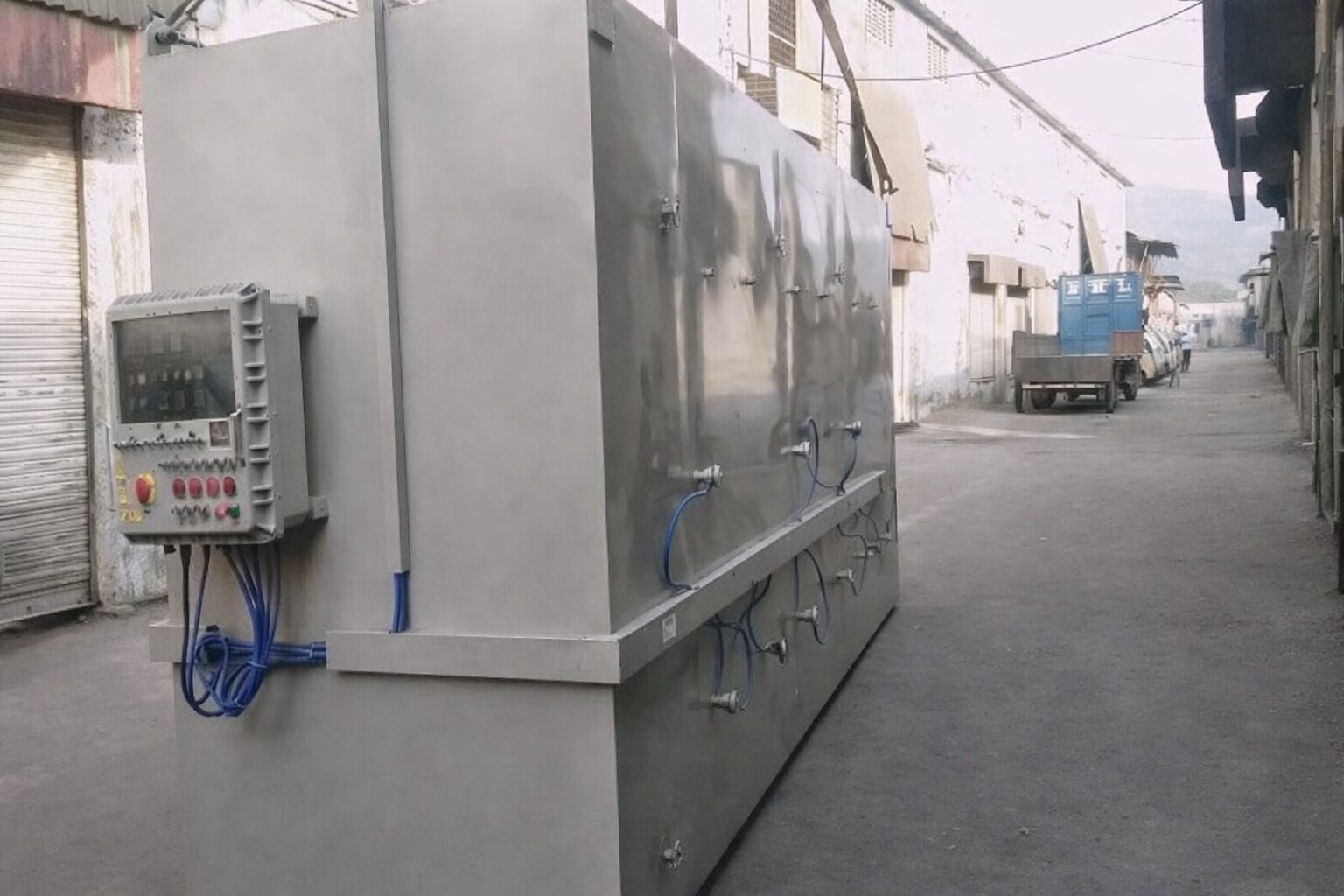
Box Dryer
Click to view high-res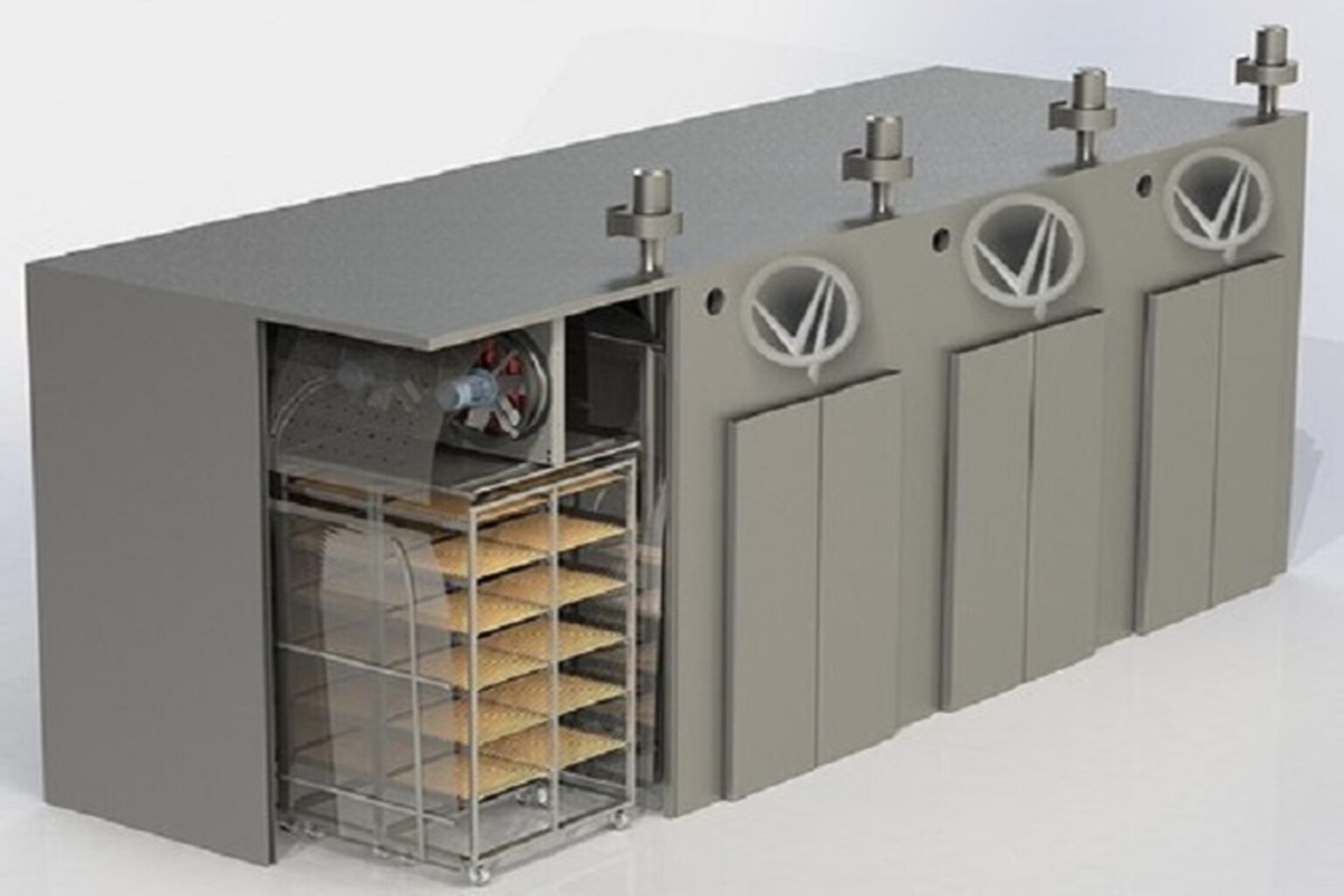
Box Dryer
Click to view high-res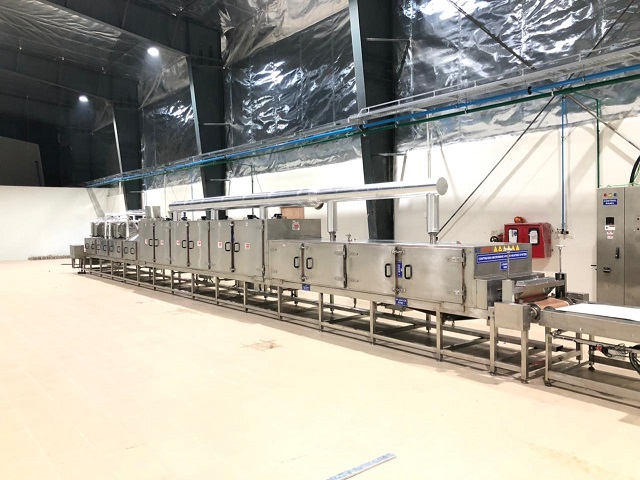
Box Dryer
Click to view high-res
Box Dryer
Click to view high-res50+ Years of Thermal Engineering Leadership.
Since 1976, Kerone Engineering Solutions has delivered over 5,000 custom-engineered thermal and process installations across 50+ countries. In technical collaboration with premier global institutions like CSIR-CEERI and University of Nottingham research partnerships, we design and manufacture high-efficiency machinery that minimizes production downtime and cuts operating expenses.
Unlike standard off-the-shelf equipment suppliers, Kerone operates a complete pilot-scale testing facility at our KRDC Ambernath center. We validate your exact raw material properties — determining moisture sorption isotherms, specific heat capacity, and dielectric behavior — before finalizing equipment sizing, ensuring zero risk during industrial scale-up.
Engineering precision, built into every system.
High Drying Rate
High drying rate with efficient heat transfer design.
Energy-efficient Operation
Energy-efficient operation with controlled temperature settings.
Ideal for Heat-sensitive and
Ideal for heat-sensitive and moisture-rich materials.
Fully Automated Operation
Fully automated operation with minimal manual intervention.
Robust Construction Suitable
Robust construction suitable for continuous operation.
Uniform Drying Ensuring Product
Uniform drying ensuring product consistency.
Flexible Design Adaptable
Flexible design adaptable for various industries.
Reduced Operational Downtime and
Reduced operational downtime and maintenance costs.
Powered by AI, Machine Learning & Smart IoT Integration
Modern industrial processing requires unprecedented thermal precision, energy efficiency, and operational agility. Kerone equips each system with high-speed industrial edge computing controllers, multi-spectral non-contact infrared pyrometry, and proprietary closed-loop machine learning algorithms that continuously analyze process parameters in real time.
The intelligent automation stack monitors dynamic changes in incoming material load, bed thickness, moisture content, and environmental factors. In response, our algorithms dynamically adjust heater power arrays, generator frequency, conveyor drive velocities, and exhaust dampers within milliseconds — entirely eliminating product burn, under-processing, or thermal hotspotting.
Seamlessly integrated with factory-wide SCADA and enterprise ERP architectures via native MQTT, OPC-UA, and Modbus TCP protocols, our systems deliver complete digital recipe control, remote diagnostics, predictive maintenance alerting, and tamper-evident batch logs compliant with global FDA 21 CFR Part 11 and cGMP standards.
Adaptive Heat Modulation
Neural algorithms detect material thermal variations in real time (<50ms response) and tune generator frequency and power arrays automatically.
IoT Cloud Telemetry
Continuous bidirectional telemetry stream via MQTT/OPC-UA protocols directly to centralized plant SCADA, MES, or mobile engineer dashboards.
Predictive Maintenance
Monitors magnetron cathode current, vibration frequency signatures, and differential filter pressure to schedule AMC maintenance before failures occur.
Quality & Batch Traceability
Automated digital recipe execution, multi-stage temperature ramp/soak curves, and cryptographically signed electronic batch logs compliant with 21 CFR Part 11.
Engineered for High-Value Industrial Sectors
Tailored thermal and process configurations across continuous manufacturing lines.
Food & Dairy
Milk powder, starch, coffee, and fruit pulp drying.
Chemical
Drying of pigments, catalysts, and polymer granules.
Pharmaceutical
Spray-drying of extracts and heat-sensitive drugs.
Textile
Removal of residual moisture from fabric and yarn.
Agricultural
Drying of grains, seeds, and organic fertilizers.
Configured to Your Process Window
Technical parameter envelopes across industrial manufacturing and engineering architectures.
Frequently Asked Questions
Engineering answers regarding equipment sizing, integration, and process performance.
A box dryer is a system that removes moisture using controlled heat and airflow for uniform drying results.
It operates through a process of heat transfer and air circulation to evaporate moisture from materials efficiently.
It provides high efficiency, uniform drying, and low energy consumption.
Industries such as food, chemical, pharmaceutical, and textile rely heavily on these dryers.
Yes, Kerone designs systems tailored to specific process and material needs.
The design ensures quick cleaning and minimal servicing requirements.
Kerone’s systems are optimized for reduced power consumption and higher heat utilization.
Yes, adjustable settings allow customized drying for varied product types.
A high-velocity box dryer recirculates air at significantly higher velocities than a standard box dryer, typically 2–5 m/s at the tray surface versus 0.5–1.5 m/s in conventional designs. Higher velocity improves the convective heat transfer coefficient at the product surface, reducing the boundary layer resistance to moisture evaporation. This results in shorter cycle times, especially during the constant-rate drying phase when surface moisture removal is the limiting step. High-velocity box dryers are preferred when throughput is constrained by drying time, when tray-to-tray variation is unacceptable, or when the product surface must be dried quickly to prevent microbial growth. The trade-off is higher electrical consumption due to larger fan motors.
Temperature mapping is the standard verification method. Calibrated temperature data loggers are placed at multiple tray levels and horizontal positions within the loaded chamber, and a full drying cycle is run. The resulting data shows the maximum temperature differential within the chamber over the entire cycle. For general industrial applications, a ±5°C uniformity across the chamber is typically acceptable. Pharmaceutical applications governed by cGMP guidelines require more stringent mapping, often ±2°C or better with formal IQ/OQ/PQ qualification protocols. Kerone designs baffles, air plenums, and heater arrangements specifically to achieve the required temperature uniformity based on the application's quality standard.
Box dryers can be configured for solvent drying, but the design must incorporate specific safety provisions. These include spark-proof (EX-rated) fan motors and electrical components, exhaust damper control to prevent vapour accumulation above the lower explosive limit, and a continuous exhaust air purge that maintains solvent vapour concentration well below 25% of the LEL. For large installations, solvent recovery condensers capture exhaust vapours for reuse rather than venting them. Dryers intended for flammable solvent service must be engineered and certified to the applicable hazardous area standard (ATEX in Europe, IECEx internationally) and should not be substituted with standard box dryer designs as this creates a serious explosion risk.
Over-loading trays is one of the most common operational mistakes in batch box drying. When product bed depth exceeds the recommended maximum, which varies by material porosity and drying air velocity, the air cannot penetrate the entire bed thickness. The result is a dried surface layer with a wet core, leading to non-uniform moisture content across the batch. Kerone specifies maximum product depth per tray for each application during process design. For dense materials like ceramic tiles or rubber slabs, single-layer loading may be necessary. For granular or particulate products, perforated trays with recommended bed depths of 20–50 mm are typical. Consistent tray loading is essential for reproducible batch results.
Kerone offers several application-specific customisations for box dryers. These include programmable multi-step temperature and humidity profiles for controlled-atmosphere drying of wood or leather; steam injection for humidity control in products that require conditioning rather than drying; nitrogen purge systems for oxygen-sensitive materials; stainless steel construction with sanitary finish for food and pharmaceutical applications; HEPA filtration on inlet air for cleanroom-compatible drying; and explosion-proof construction for flammable materials. Large pharmaceutical box dryers can also be fitted with validated data acquisition systems that record time-temperature profiles for each batch, generating the audit trail required for regulatory submissions.
For heavy products like cast components, thick ceramic slabs, or large rubber mouldings, tray loading by hand is impractical. Trolley-based box dryers use wheeled trolley frames with multiple tray levels that are loaded outside the dryer at ergonomic height using fork-lift or hydraulic trolley jacks, then rolled into the dryer chamber on guide rails. The chamber door seals around the trolley frame. This design eliminates the manual handling of heavy trays, reduces loading time, and allows batch changeover with minimal disruption to production flow. For facilities running multiple product types, dedicated trolleys per product prevent cross-contamination and reduce changeover cleaning requirements.
A robustly constructed industrial box dryer with a heavy-gauge mild or stainless steel body, properly specified insulation, and quality electrical components can remain in productive service for 20–25 years with correct maintenance. The components most likely to require periodic replacement are heating elements (every 5–10 years depending on duty cycle and operating temperature), door seals and gaskets (every 2–4 years), fan bearings (every 3–5 years based on hours of operation), and temperature sensor calibration standards (annually). Kerone maintains a spare parts inventory for its equipment and can supply replacement components on short lead times, reducing the risk of extended production downtime from component failure.
Let’s Engineer the Right Process.
From application trials to full-scale production systems, our engineering team works with you to develop the right thermal processing solution for your material, throughput, and production requirements.