
Microwave Medical Waste Treatment
We at Kerone are having more than 5 decades of experience in helping society with best possible technology of heat treatment. Microwave based systems designed and manufactured by us comply to international standards for safety and treatment.
Engineered precision for Microwave Medical Waste Treatment.
We at Kerone are having more than 5 decades of experience in helping society with best possible technology of heat treatment. Microwave based systems designed and manufactured by us comply to international standards for safety and treatment. Kerone’s microwave systems combines with various other processes such as grinding or crushing or any other processing need combine it makes to compact and automated system. Machineries are designed to align with the local municipal and/or governing bodies rules and regulations.
Microwave medical waste treatment systems are designed to safely disinfect and reduce hazardous healthcare waste using controlled microwave energy. The main types include batch-type systems, continuous conveyor-based systems, and integrated shredding-microwave units that combine size reduction with simultaneous disinfection.
These systems are equipped with automatic feeding mechanisms, high-efficiency microwave generators, temperature and moisture control sensors, and PLC-based control panels for precise operation. Key features include uniform internal heating for effective pathogen destruction, reduced emission levels compared to incineration, energy efficiency, compact design, and low operational costs.
Microwave medical waste treatment units are suitable for hospitals, laboratories, clinics, and pharmaceutical facilities, ensuring environmentally friendly and compliant waste disposal.
Our advanced AI, ML, and IoT technologies, this solution delivers smarter automation, real-time insights, and predictive intelligence to enhance efficiency and drive future-ready growth.
Continuous tracking of process parameters with instant adjustments.
Intelligent fault detection to prevent failures before they occur.
The thermodynamic architecture of our Microwave Medical Waste Treatment incorporates advanced thermal modeling and computational fluid dynamics (CFD) to ensure optimal heat and mass transfer across the entire processing zone. By precisely controlling thermal gradients, air velocity profiles, and direct energy delivery mechanisms, the system achieves uniform treatment while preventing localized overheating, product degradation, or thermal stress. This balance of intensive heat transfer and controlled retention time ensures maximum operational throughput with minimal specific energy consumption.
Built with heavy-duty structural engineering and sanitary metallurgy, each unit is manufactured to withstand continuous 24/7 industrial operating conditions. Contact surfaces are finished in high-grade stainless steel (SS 304, SS 316L, or corrosion-resistant alloys) with sanitary mirror-polish options, CIP/SIP washdown provisions, and hermetic chamber sealing. This guarantees full compliance with stringent international hygiene, CE machinery directives, and cGMP standards across food, pharmaceutical, specialty chemical, and heavy manufacturing applications.
Proprietary control algorithms ensure strict process repeatability, while built-in safety interlocks and electromagnetic shielding comply with international CE and OSHA standards. Full process development support — including material loss tangent testing, moisture sorption isotherms, and pilot trials at our Ambernath R&D facility — ensures the selected technology matches your exact industrial throughput goals.
Product & Systems Gallery
Explore authentic high-resolution photographs of industrial machinery, pilot trial rigs, and continuous turnkey processing installations engineered by Kerone Engineering Solutions for Microwave Medical Waste Treatment. Each system is fabricated at our ISO 9001:2015 certified manufacturing facilities with precision laser cutting, robotic welding, and stringent Factory Acceptance Testing (FAT).
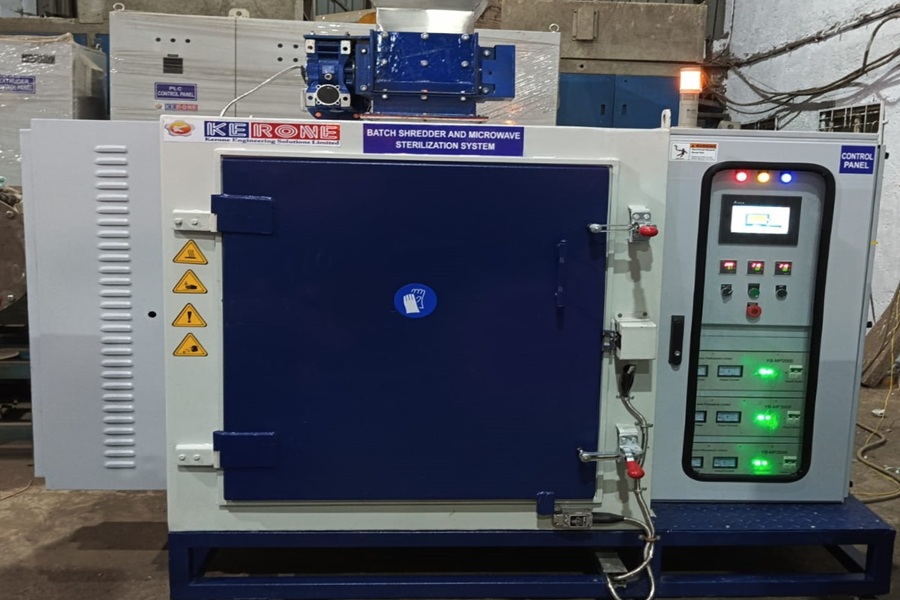
Microwave Medical Waste Treatment
Click to view high-res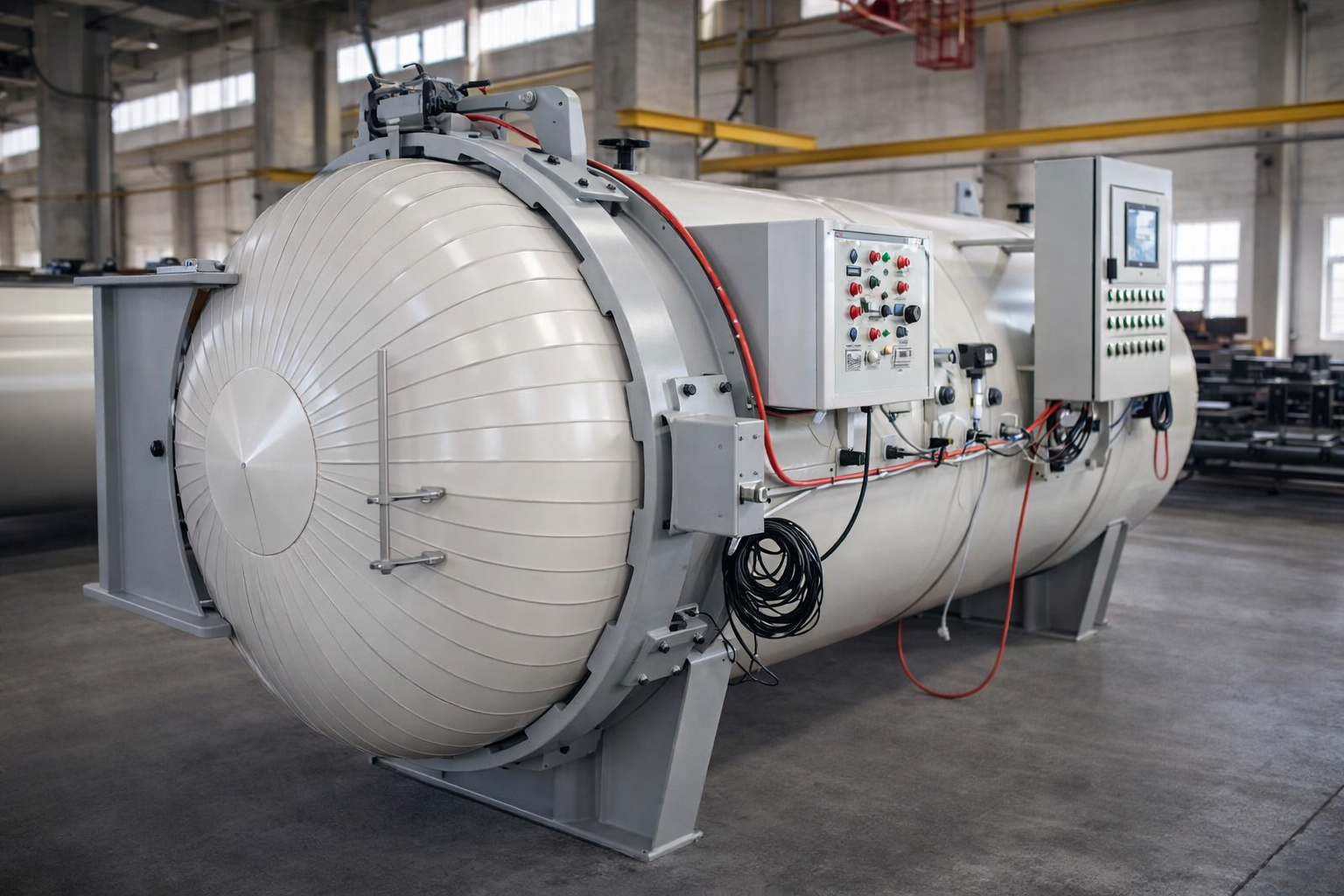
Microwave Medical Waste Treatment
Click to view high-res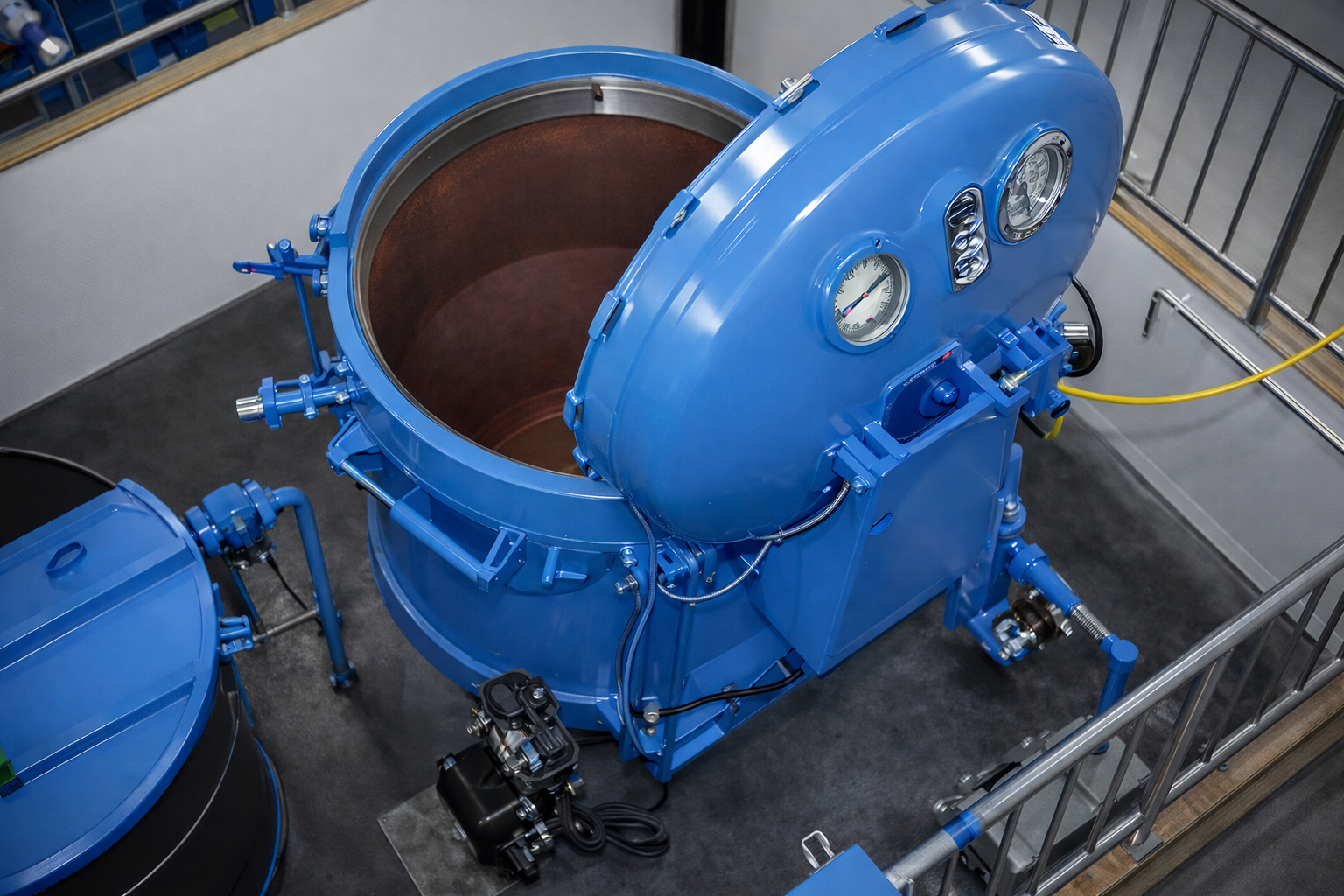
Microwave Medical Waste Treatment
Click to view high-res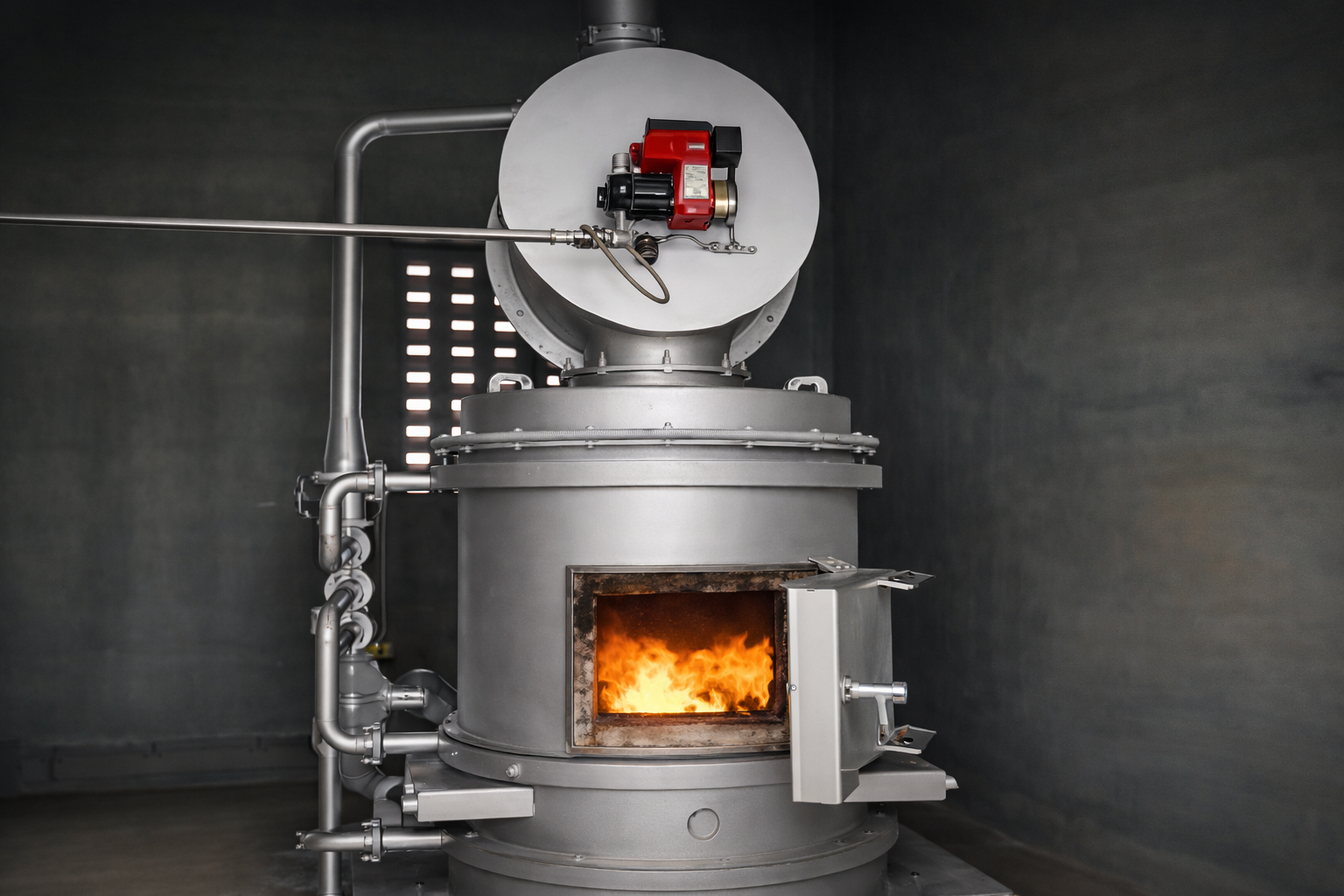
Microwave Medical Waste Treatment
Click to view high-res
Microwave Medical Waste Treatment
Click to view high-res
Microwave Medical Waste Treatment
Click to view high-res50+ Years of Thermal Engineering Leadership.
Since 1976, Kerone Engineering Solutions has delivered over 5,000 custom-engineered thermal and process installations across 50+ countries. In technical collaboration with premier global institutions like CSIR-CEERI and University of Nottingham research partnerships, we design and manufacture high-efficiency machinery that minimizes production downtime and cuts operating expenses.
Unlike standard off-the-shelf equipment suppliers, Kerone operates a complete pilot-scale testing facility at our KRDC Ambernath center. We validate your exact raw material properties — determining moisture sorption isotherms, specific heat capacity, and dielectric behavior — before finalizing equipment sizing, ensuring zero risk during industrial scale-up.
Engineering precision, built into every system.
High Thermal and Processing
High thermal and processing efficiency
Low Maintenance and Easy
Low maintenance and easy operation
Suitable
Suitable for heat-sensitive materials
Fully Adjustable and
Fully adjustable and customizable process parameters
Available in Batch and
Available in batch and continuous configurations
Uniform Processing and
Uniform processing and consistent product quality
Powered by AI, Machine Learning & Smart IoT Integration
Modern industrial processing requires unprecedented thermal precision, energy efficiency, and operational agility. Kerone equips each system with high-speed industrial edge computing controllers, multi-spectral non-contact infrared pyrometry, and proprietary closed-loop machine learning algorithms that continuously analyze process parameters in real time.
The intelligent automation stack monitors dynamic changes in incoming material load, bed thickness, moisture content, and environmental factors. In response, our algorithms dynamically adjust heater power arrays, generator frequency, conveyor drive velocities, and exhaust dampers within milliseconds — entirely eliminating product burn, under-processing, or thermal hotspotting.
Seamlessly integrated with factory-wide SCADA and enterprise ERP architectures via native MQTT, OPC-UA, and Modbus TCP protocols, our systems deliver complete digital recipe control, remote diagnostics, predictive maintenance alerting, and tamper-evident batch logs compliant with global FDA 21 CFR Part 11 and cGMP standards.
Adaptive Heat Modulation
Neural algorithms detect material thermal variations in real time (<50ms response) and tune generator frequency and power arrays automatically.
IoT Cloud Telemetry
Continuous bidirectional telemetry stream via MQTT/OPC-UA protocols directly to centralized plant SCADA, MES, or mobile engineer dashboards.
Predictive Maintenance
Monitors magnetron cathode current, vibration frequency signatures, and differential filter pressure to schedule AMC maintenance before failures occur.
Quality & Batch Traceability
Automated digital recipe execution, multi-stage temperature ramp/soak curves, and cryptographically signed electronic batch logs compliant with 21 CFR Part 11.
Engineered for High-Value Industrial Sectors
Tailored thermal and process configurations across continuous manufacturing lines.
Hospital and clinic infectious wast...
Hospital and clinic infectious waste treatment including sharps, dressings, and laboratory waste
Pharmaceutical manufacturing waste ...
Pharmaceutical manufacturing waste decontamination including culture media and contaminated materials
Veterinary clinic and animal resear...
Veterinary clinic and animal research facility infectious waste treatment
Centralized medical waste processin...
Centralized medical waste processing facilities serving multiple healthcare institutions
Blood bank and transfusion service ...
Blood bank and transfusion service waste treatment
Configured to Your Process Window
Technical parameter envelopes across industrial manufacturing and engineering architectures.
Frequently Asked Questions
Engineering answers regarding equipment sizing, integration, and process performance.
It is used for efficient processing, heating, drying or material transformation.
High efficiency, process reliability and complete customization.
Yes, Kerone offers fully customized engineering solutions.
Food, chemical, pharma, biomass, rubber, textile and more.
Infectious waste including bandages, gloves, lab materials, culture media, and small sharps containers can be treated. Radioactive waste, cytotoxic waste, and large metal sharps require alternative treatment.
Properly treated and validated medical waste is classified as non-infectious general municipal solid waste in most jurisdictions and can be disposed of in regular landfill facilities.
Kerone's systems include HEPA filtration of exhaust air, activated carbon odour treatment, and condensate collection to ensure no infectious aerosols or odours are released.
Kerone provides complete validation protocols, biological indicator test procedures, process documentation, and technical support for obtaining regulatory certification in the client's jurisdiction.
Microwave medical waste treatment works by generating electromagnetic energy at around 2450 MHz that excites water molecules inside the waste stream. This rapid molecular agitation generates heat directly within the material, not just on its surface, raising the waste to disinfection temperature within minutes. Because moisture is present in almost all infectious waste, including soiled dressings, lab cultures, and biological fluids, microwave energy couples efficiently into the load and achieves consistent core-to-surface heating. Validated cycles routinely meet or exceed the log-reduction levels required by autoclaving standards, and many regulatory bodies treat microwave disinfection as an equivalent alternative technology. The key difference from autoclaving is that there is no need for high-pressure steam generation, which simplifies plant utilities and reduces water consumption.
Microwave treatment is designed for infectious and biohazardous waste such as soiled dressings, gloves, tubing, culture media, and most laboratory plastics. It is not suitable for radioactive waste, cytotoxic or chemotherapy waste, mercury-containing items, or large metallic sharps, since these materials either do not respond to dielectric heating or pose separate hazard classes that require dedicated handling. Pharmaceutical waste with controlled substances typically needs separate destruction protocols as well. Buyers should segregate waste streams at the point of generation and confirm with their equipment supplier which categories are validated for their specific facility's waste profile, since hospital waste composition varies significantly by department and case mix.
Microwave-based medical waste treatment generally lowers operating costs in three areas: fuel, emissions compliance, and waste transport. Unlike incineration, which consumes diesel or gas continuously to maintain combustion temperatures, microwave systems draw power only during the active heating cycle and run on standard electrical infrastructure. There is no flue gas scrubbing system to maintain, no ash disposal cost, and no requirement for continuous emissions monitoring equipment. Treated waste is also typically lighter and more compact after shredding, reducing landfill transport frequency. The main costs to budget for are electricity consumption per cycle, magnetron or generator replacement over the equipment's service life, and routine filter and gasket maintenance, all of which are lower than the fuel and compliance burden of thermal incineration.
Once medical waste completes a validated microwave disinfection cycle and passes biological indicator testing, most regulatory frameworks reclassify it as non-hazardous general waste. This means it no longer requires special biohazard labeling, dedicated transport manifests, or hazardous waste disposal contracts in most jurisdictions. Facilities should retain cycle records and validation logs as proof of treatment for compliance audits, since regulators may request documentation showing the waste met required temperature and exposure-time parameters. This single classification change is often the biggest operational win for hospitals switching from incineration, as it removes ongoing hazardous waste manifesting and reduces dependence on specialized waste haulers.
Capacity sizing starts with measuring the facility's average daily waste generation in kilograms, then factoring in peak load periods such as surgical days or outbreak situations. Batch systems suit smaller hospitals and clinics generating limited daily volumes, while continuous conveyor-based systems with integrated shredding are better suited to centralized treatment facilities serving multiple healthcare institutions. Sizing also depends on waste density and moisture content, since denser, wetter loads take longer to reach disinfection temperature than light, dry waste. A proper capacity assessment includes a site waste audit, projected growth over the next five to ten years, and consideration of redundancy if the facility cannot tolerate downtime for waste accumulation.
Modern microwave medical waste systems minimize manual handling through automatic feed mechanisms, interlocked loading doors, and PLC-controlled cycle sequencing that prevents the chamber from opening until the disinfection cycle and cooling period are complete. Integrated shredding before or after microwave exposure further reduces the risk of needle-stick or sharps injury during handling. Sensors monitor internal temperature and moisture throughout the cycle, automatically extending treatment time if target parameters are not reached, rather than relying on operator judgment. This level of automated processing is particularly valuable in high-throughput centralized facilities where staff handle waste from multiple source hospitals and consistency between batches is critical for compliance.
With proper maintenance, the structural components of a microwave medical waste treatment system, including the chamber, conveyor, and shredding unit, typically remain serviceable for fifteen to twenty years. The microwave generators themselves have a finite operating life measured in hours of active use, and these are designed as replaceable modules rather than requiring full system replacement. Decisions to replace equipment usually stem from a change in regulatory disinfection standards, a significant increase in waste volume beyond the system's rated capacity, or repeated control system failures as electronics age. Facilities planning for a ten-year-plus horizon should ask suppliers about generator replacement intervals and spare parts availability before purchase.
Let’s Engineer the Right Process.
From application trials to full-scale production systems, our engineering team works with you to develop the right thermal processing solution for your material, throughput, and production requirements.